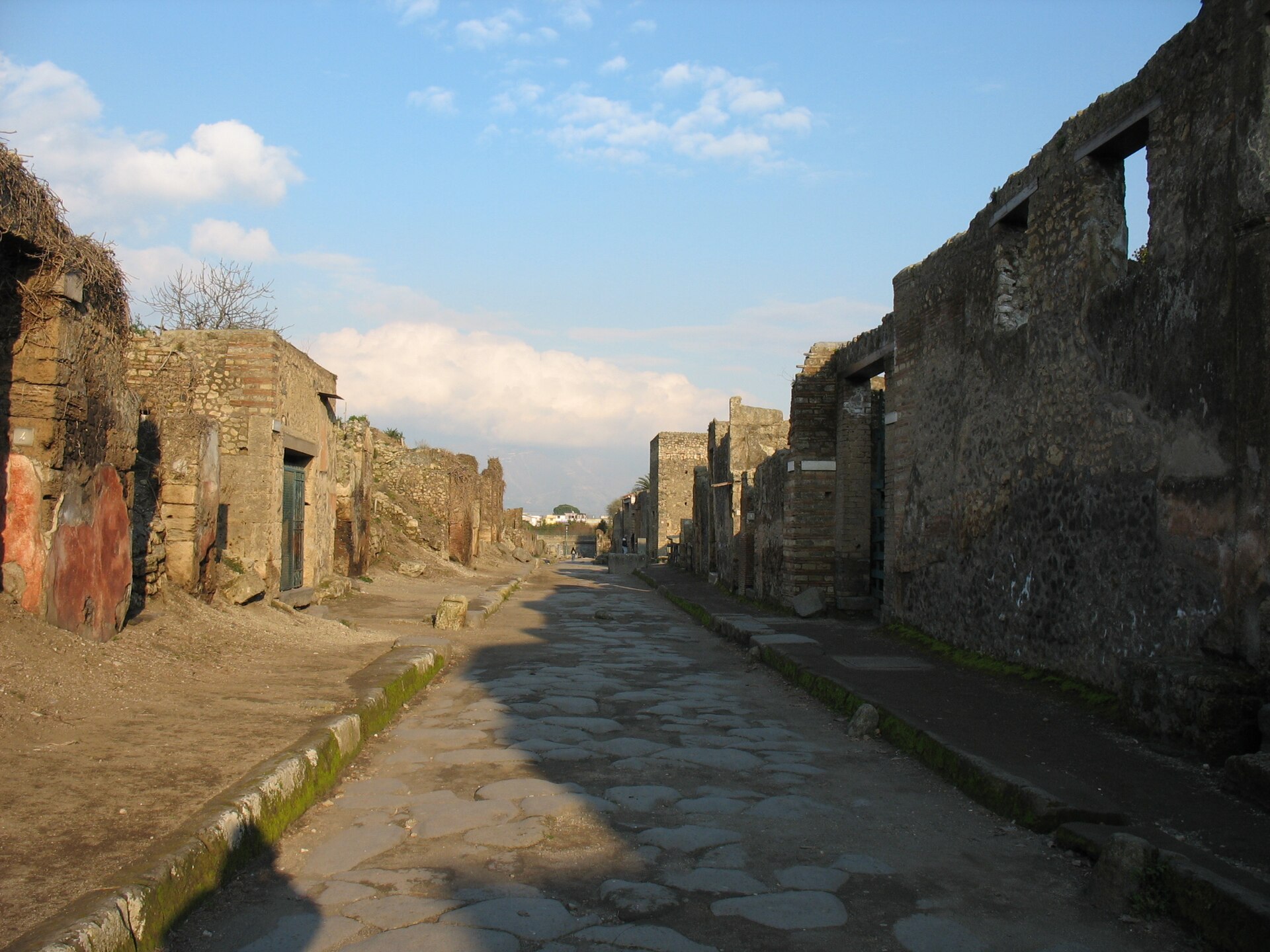
Pompeii stood on the Bay of Naples as a prosperous Roman port of an estimated 10,000–20,000 people by the first century CE. Its streets held bakeries, taverns and workshops; its walls carried painted advertisements and election slogans; wealthy residents commissioned frescoes and mosaic floors. The city exported wine, olive oil and garum across the Mediterranean, and its amphitheatre could seat 20,000.
On 24 August 79 CE Vesuvius erupted. Pumice rained for hours, then pyroclastic surges of superheated gas and ash swept through the city, killing those who had not fled. By morning Pompeii lay under six to seven metres of debris. It stayed buried and largely forgotten until systematic excavation began in 1748. Today it is a UNESCO World Heritage Site and one of the most-visited archaeological parks in the world.
Worth remembering
- Pompeii was a busy trading port exporting wine, olive oil and fish sauce (garum); its streets were lined with thermopolia (fast-food counters) and taverns.
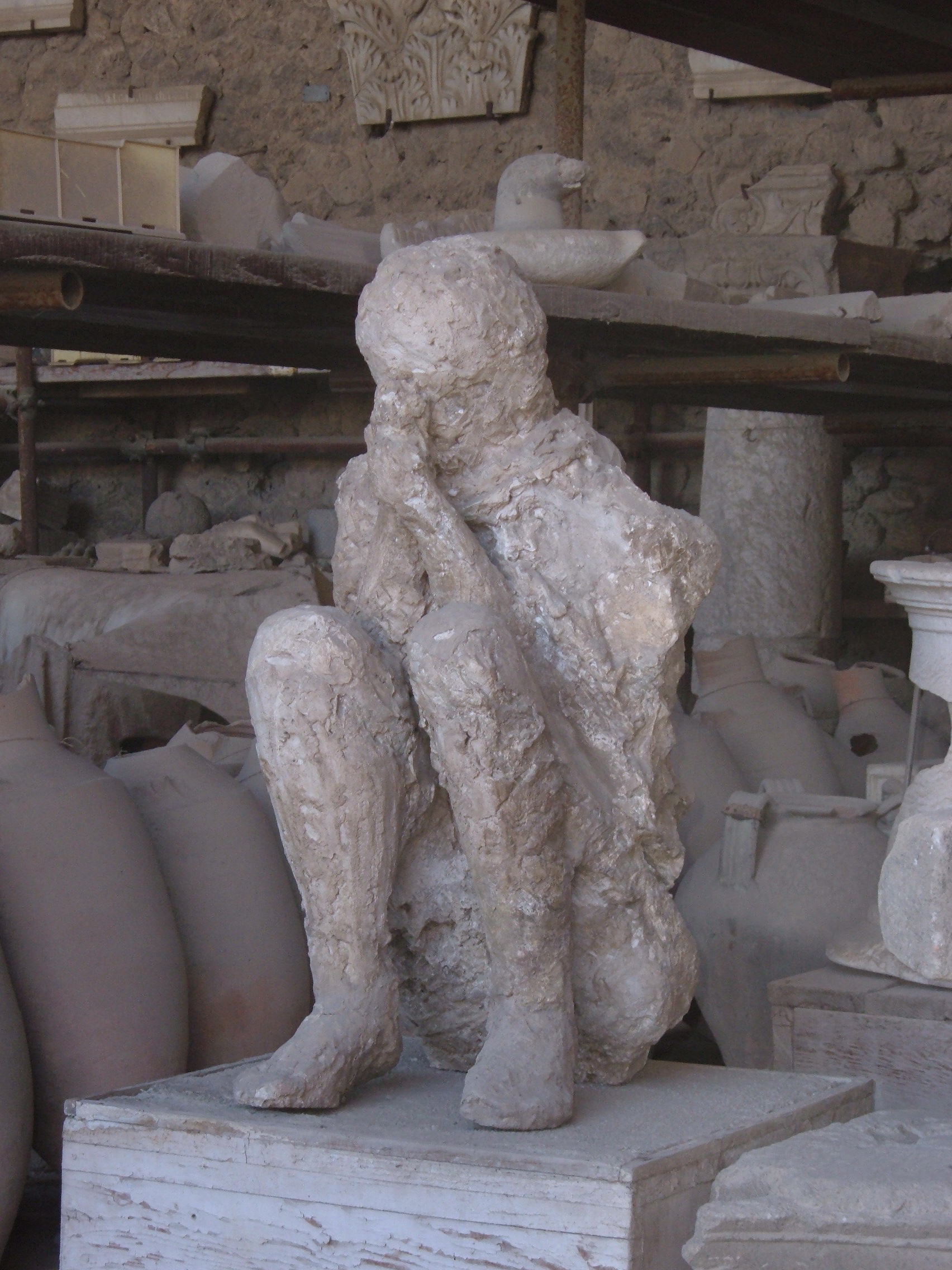
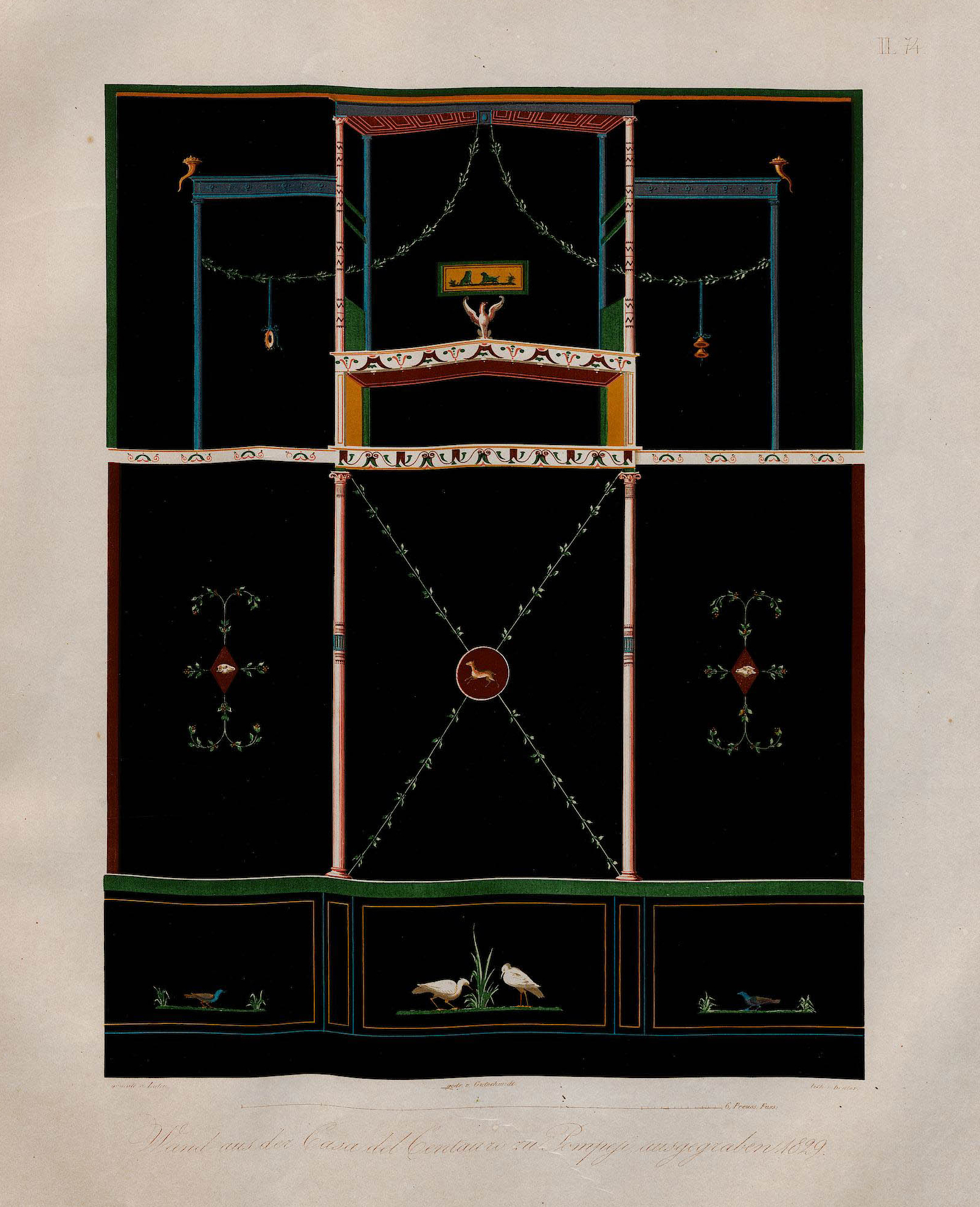
- Its recovery after 1748 — frescoes, mosaics, an amphitheatre seating 20,000, bodies cast in the voids left in the ash — effectively launched the modern science of archaeology.
The people
-
Pliny the Younger — Eyewitness who recorded the eruption, c. 61–113 CE
His two letters to Tacitus are the only surviving eyewitness account of the Vesuvius eruption and of his uncle Pliny the Elder's death during the rescue attempt.
Gallery
Watch
Further reading
Sources
- Pompeii had 10,000–20,000 inhabitants when Vesuvius buried it on 24 August 79 CE under at least 19 feet of ash. Encyclopaedia Britannica
- The eruption produced successive surges of super-heated ash; Pliny the Younger witnessed and documented the disaster from across the bay. World History Encyclopedia
- About a third of the city remains unexcavated; volcanic ash preserved buildings, art and human remains in remarkable condition. National Geographic
A graveyard tradition: leave a stone to show you came, and remembered.