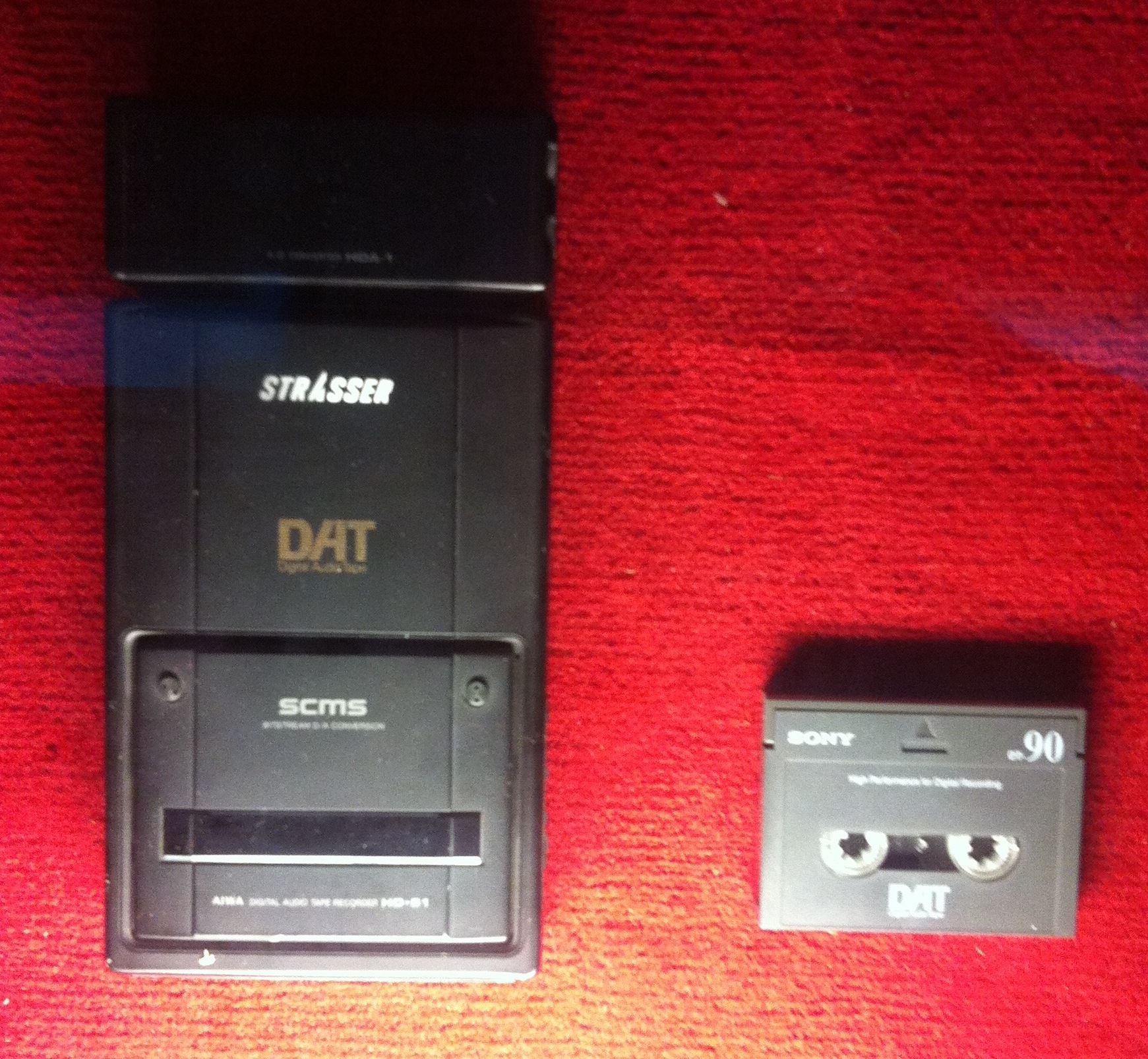
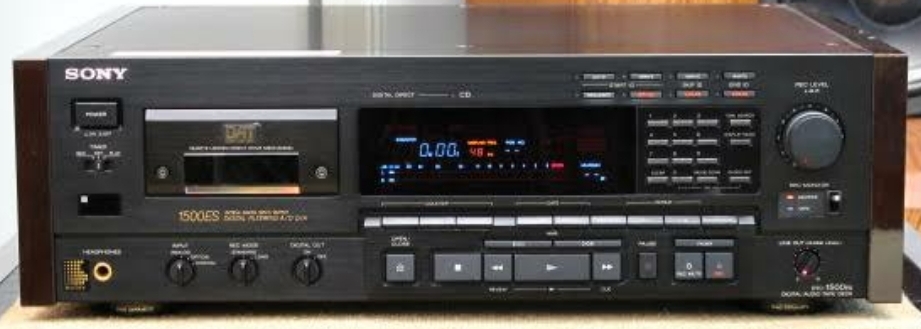
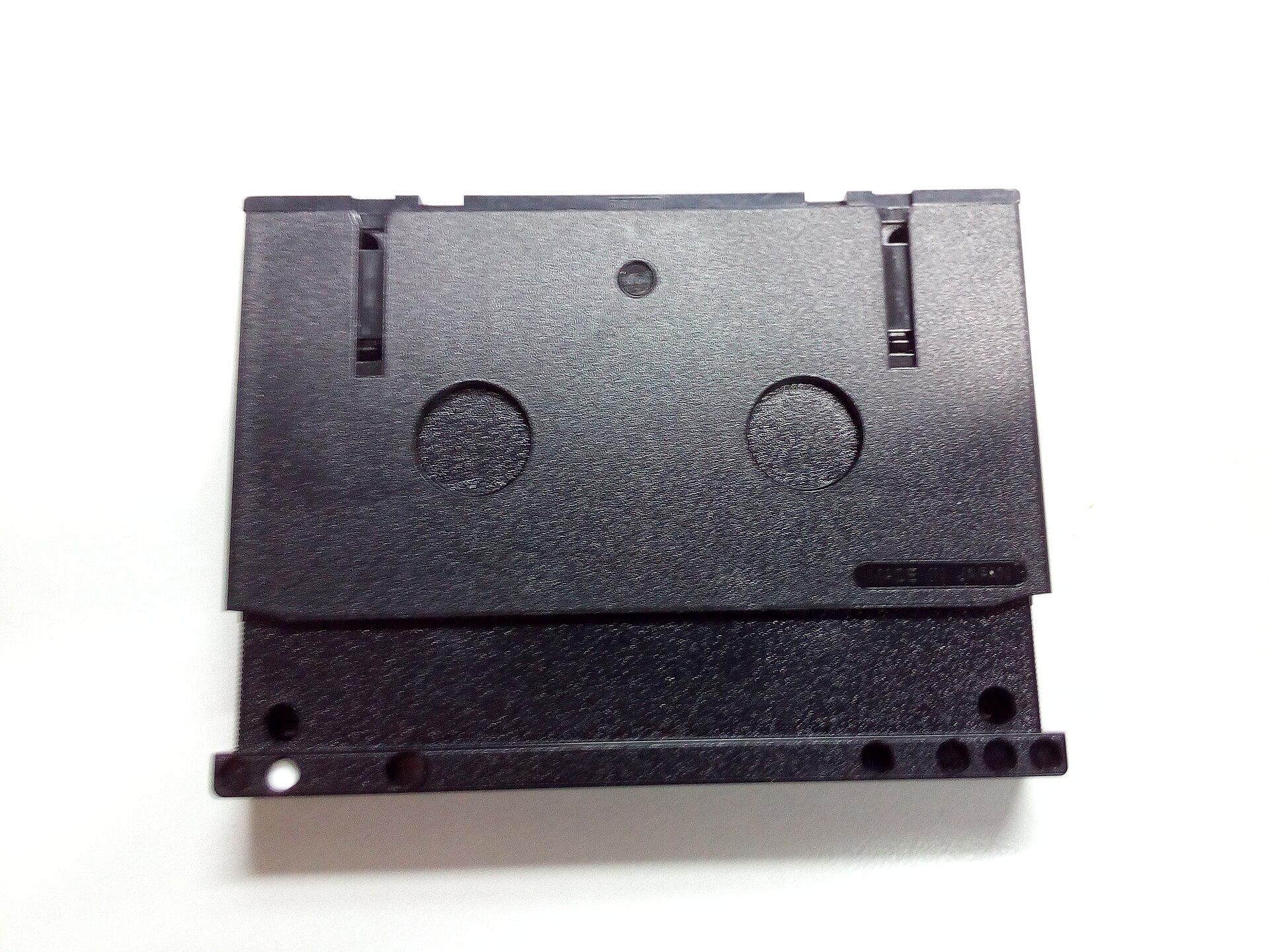
Digital Audio Tape used a rotating head, borrowed from videocassette technology, to record PCM audio onto a small cassette. Sony introduced it in 1987 as a proposed digital successor to the analog cassette. The cassettes were about half the size of a standard tape and recorded at CD-grade quality, and a DAT copy of a digital source was bit-for-bit identical — attractive to professionals and alarming to record labels. The industry won the Serial Copy Management System (SCMS) chip, which stopped consumer decks making digital copies at CD’s sampling rate, and that restriction killed mass appeal before the market formed.
Studios had no such limit, and DAT became the dominant mastering-delivery format through the 1990s; radio stations kept decks as broadcast backup. By the late 1990s cheap, reliable CD-R replaced DAT for delivery, and digital audio workstations removed the need for a separate mastering medium. Sony ended DAT recorders in November 2005 and stopped making blank tapes in 2015, closing the format’s commercial life.
Worth remembering
- Consumer DAT decks were deliberately hobbled: a copy-management chip the record industry lobbied for blocked perfect digital copies of CDs, gutting the format's mass-market appeal.
- Professional DAT had no such limit; through the 1990s the standard album workflow was to mix to a DAT master and send the tape to a plant for CD pressing.
Gallery
Watch
Sources
- DAT was introduced by Sony in 1987; Sony stopped making DAT recorders in November 2005 and ended blank DAT tape production in 2015. Wikipedia
- DAT used a rotary head adapted from videocassette technology, and consumer copying was limited by the SCMS copy-management chip. Vintage Digital
- DAT was developed by Sony in the mid-1980s and used as an emergency broadcast backup; Sony ended machine production in November 2005. New World Encyclopedia
A graveyard tradition: leave a stone to show you came, and remembered.