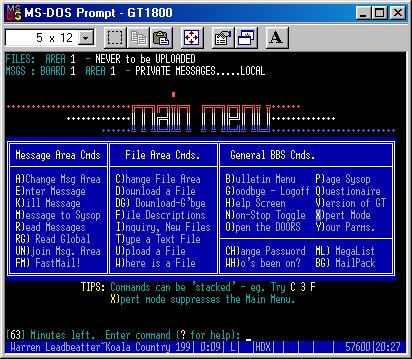
A bulletin board system was a computer running software that answered modem calls and allowed callers to post messages, read others’ posts, download files, and play multi-user games — all at speeds starting at 300 bits per second and eventually reaching 28,800 or 56,000 bps. Ward Christensen and Randy Suess put the first BBS online in Chicago on February 16, 1978, during a blizzard, as a practical experiment. The format spread steadily through hobbyist computing, reaching tens of thousands of independent systems by the late 1980s. At peak in 1994, InfoWorld estimated 60,000 US BBSes served 17 million users — an entire ecosystem of file sharing, discussion, local news, shareware software, and early online community.
The web killed it fast. When Mosaic made the internet browseable and ISPs made access affordable — around 1994 to 1995 — the structural advantages of the BBS vanished overnight. A BBS served one phone line at a time; the internet served everyone simultaneously. The BBS reached local users; the internet reached the world. Within two years the market had collapsed: magazines folded, BBS software companies went bankrupt, and sysops shut down. By 1996 the era was over. About 900 to 1,000 BBSes still operate today as deliberate nostalgia projects, most accessible via Telnet rather than modem.
Worth remembering
- A BBS was a single-node system at its simplest: one phone line, one modem, one computer, one sysop running it from a spare bedroom — meaning callers had to wait for the line to free up, sometimes queuing for hours during peak evening hours.
- By the early 1990s, large commercial BBSes like The WELL and FidoNet-connected systems had thousands of users, dedicated message bases for hundreds of topics, file download libraries, and their own subcultures — closer to early social networks than to anything else that had previously existed.
Gallery
Sources
- First BBS (CBBS) went online February 16, 1978 in Chicago; InfoWorld estimated 60,000 BBSes serving 17 million US users in 1994; peak reached around 1996 Wikipedia
- Inexpensive dial-up internet and Mosaic web browser caused rapid crash in BBS market starting late 1994 to early 1995 Wikipedia
- By September 2022, approximately 900–1,000 BBSes remain active via internet, with fewer than 30 operating via traditional dial-up modems Wikipedia
A graveyard tradition: leave a stone to show you came, and remembered.