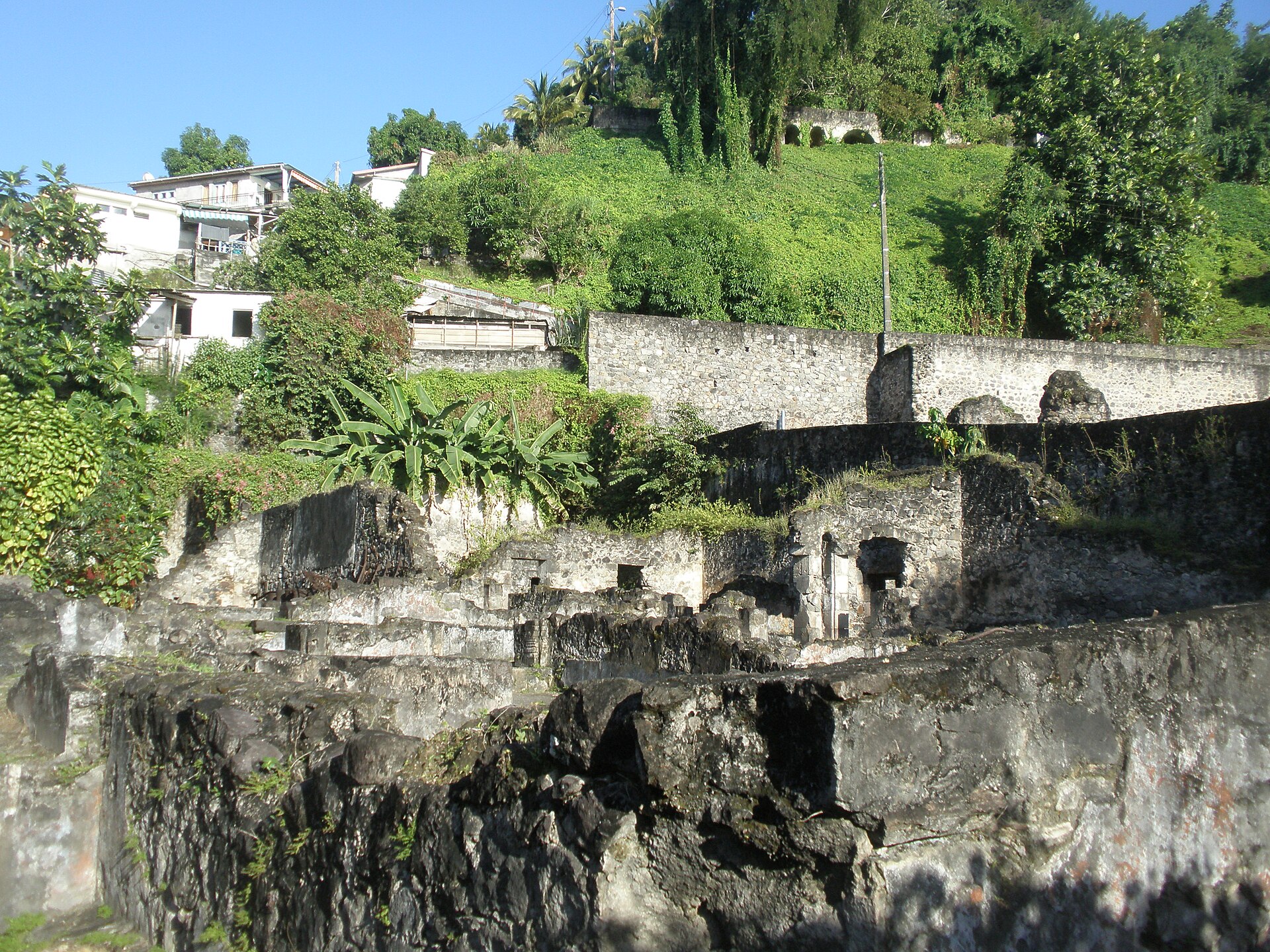
Saint-Pierre, founded in 1635, was for nearly three centuries the principal city of French Martinique and the cultural capital of the Lesser Antilles. By 1902 it had about 28,000 residents, an opera house, several newspapers, a cathedral and rum distilleries, and a port busy with sugar and rum. Visitors called it ‘the Paris of the Caribbean.’ It occupied a narrow coastal strip below Mont Pelée, dormant in living memory.
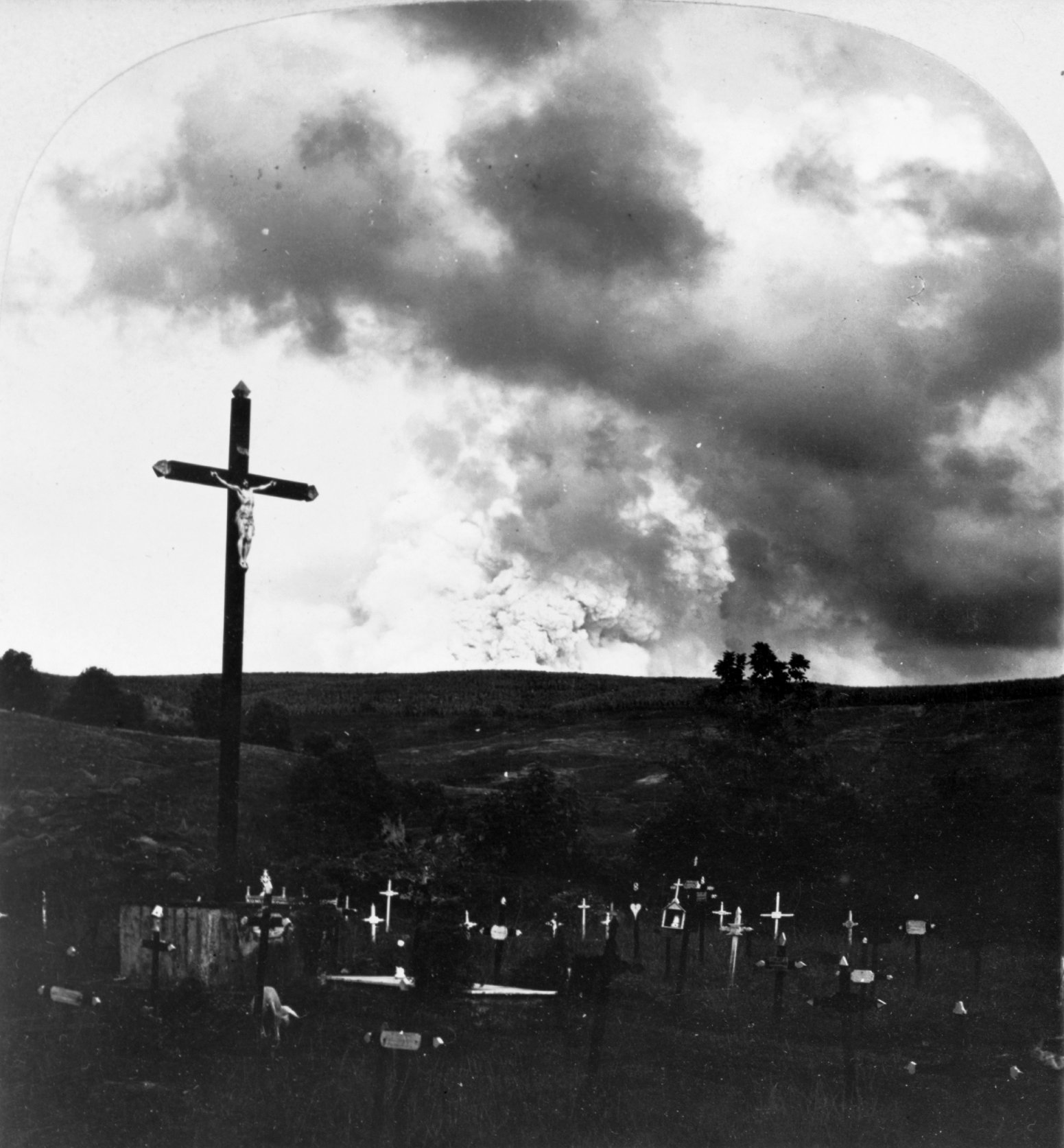
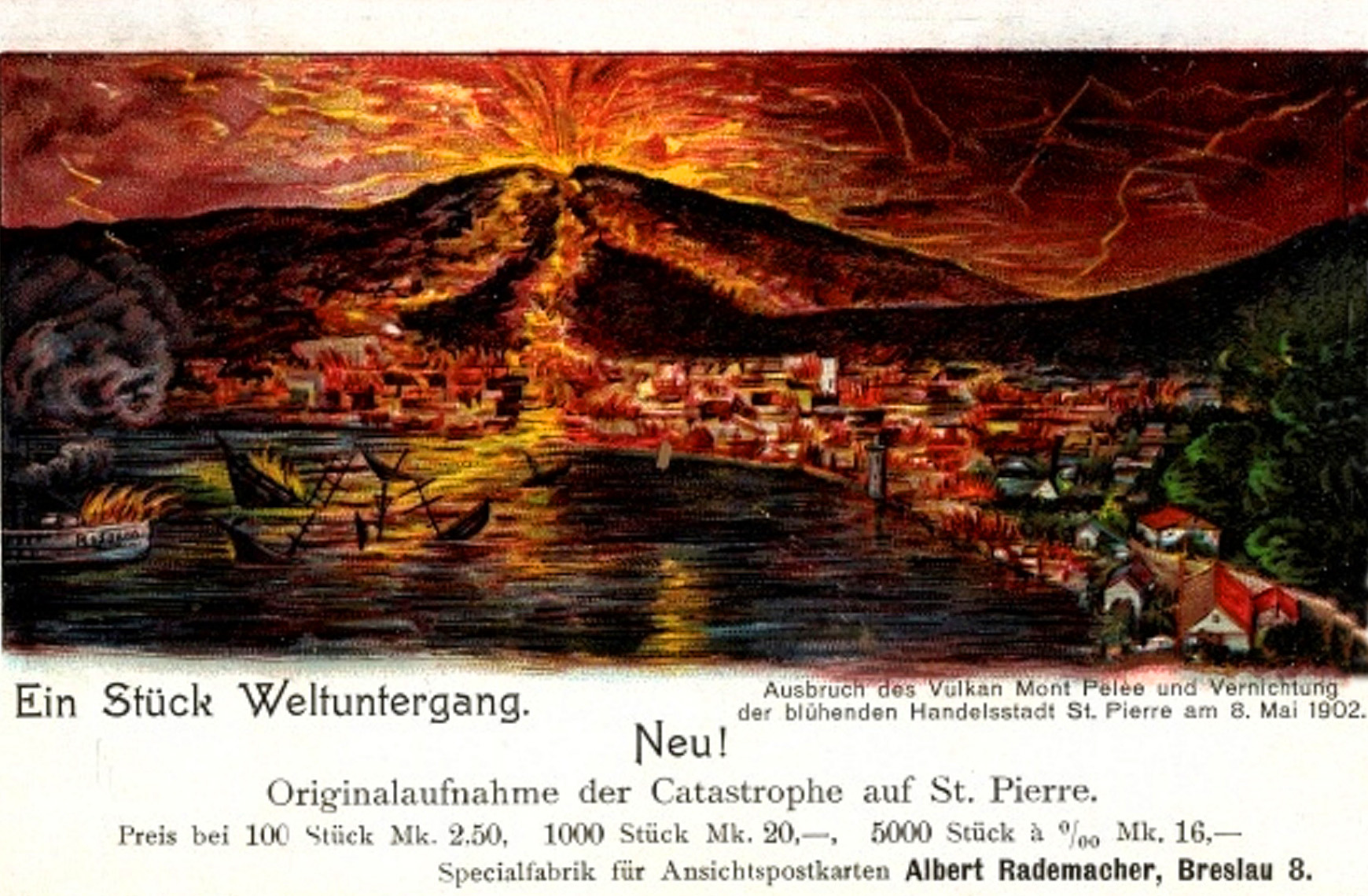
From April 1902 Pelée emitted ash and gas; a lahar on 5 May killed 23 people. The administration, worried about an upcoming election, discouraged evacuation. At 8:02 a.m. on 8 May 1902 a lateral pyroclastic surge — a superheated avalanche of gas and ash — swept down the volcano and engulfed the city in under two minutes, killing some 28,000–30,000 people. Two confirmed survivors emerged: the prisoner Louis-Auguste Cyparis, found in a thick-walled cell, and the shoemaker Léon Compère-Léandre at the city’s edge. The word ‘pelean’ now denotes this kind of eruption.
Worth remembering
- Saint-Pierre had theatres (including a replica of Bordeaux's opera house), several newspapers, a cathedral, a botanical garden, rum distilleries and a busy port — Martinique's commercial nerve centre.
- In the weeks before the eruption Pelée gave clear warnings — ashfall, fumes, a lahar that killed 23 people on 5 May — but the governor and press discouraged evacuation, partly to keep voters in town before an 11 May election.
The people
-
Louis-Auguste Cyparis — One of only two known survivors, c. 1875–1929
He survived inside a thick-walled underground prison cell; badly burned, he was found days later and later toured with Barnum & Bailey as 'the prisoner of Saint-Pierre'.
Gallery
Further reading
Sources
- On 8 May 1902 Mont Pelée's pyroclastic surge destroyed Saint-Pierre, killing about 30,000 people — roughly 15% of Martinique's population; the 'pelean' eruption type is named after it. Encyclopaedia Britannica
- Saint-Pierre was Martinique's leading city, 'the Paris of the Caribbean'; only two survivors are confirmed, a prisoner and a shoemaker. Wikipedia
- The 1902 eruption of Mont Pelée was the deadliest volcanic disaster of the 20th century. USGS
A graveyard tradition: leave a stone to show you came, and remembered.