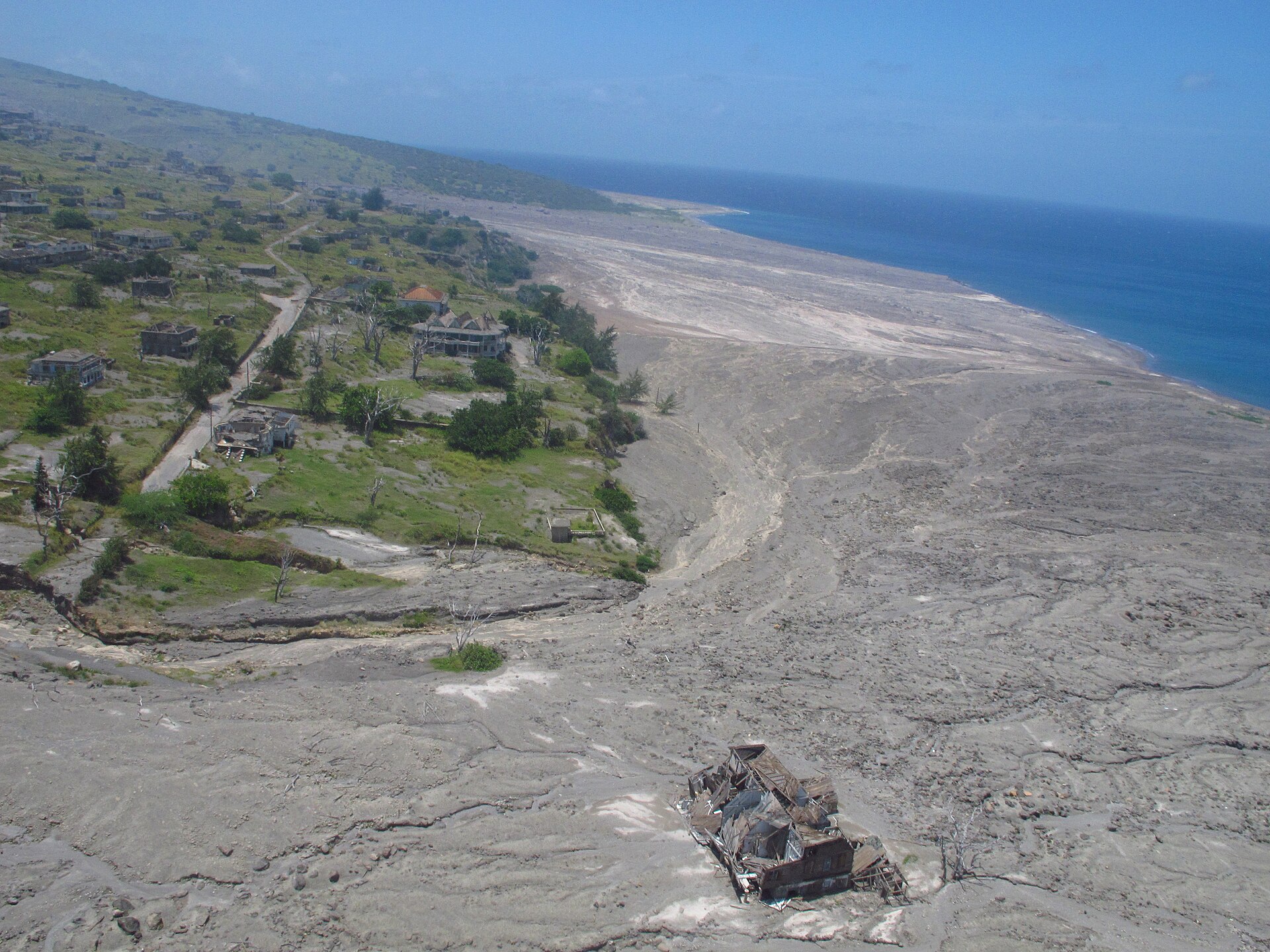
Plymouth was the capital of Montserrat, a British Overseas Territory in the Lesser Antilles, from the island’s colonisation in 1632 until 1995. A town of roughly 4,000, it held the island’s port, government, hospital and commercial district. Montserrat had no volcanic activity within recorded memory; the Soufrière Hills in the south had been dormant for centuries.
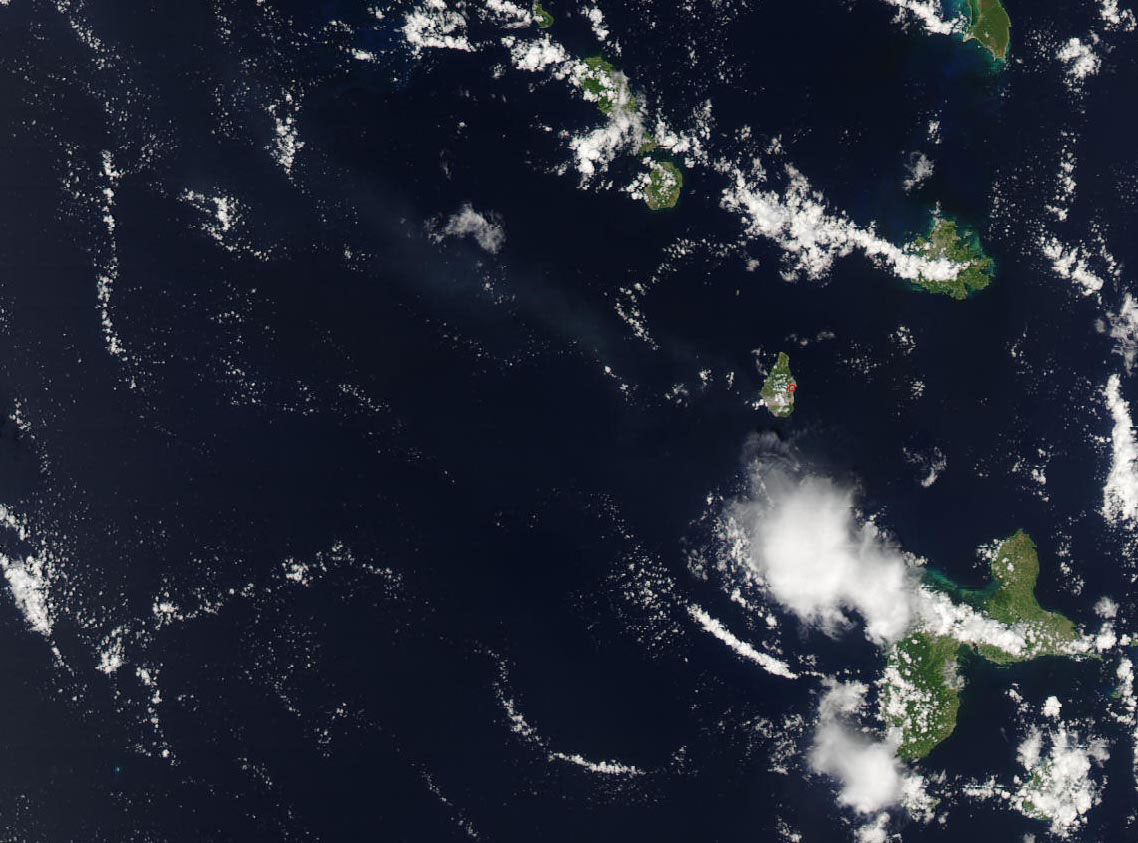
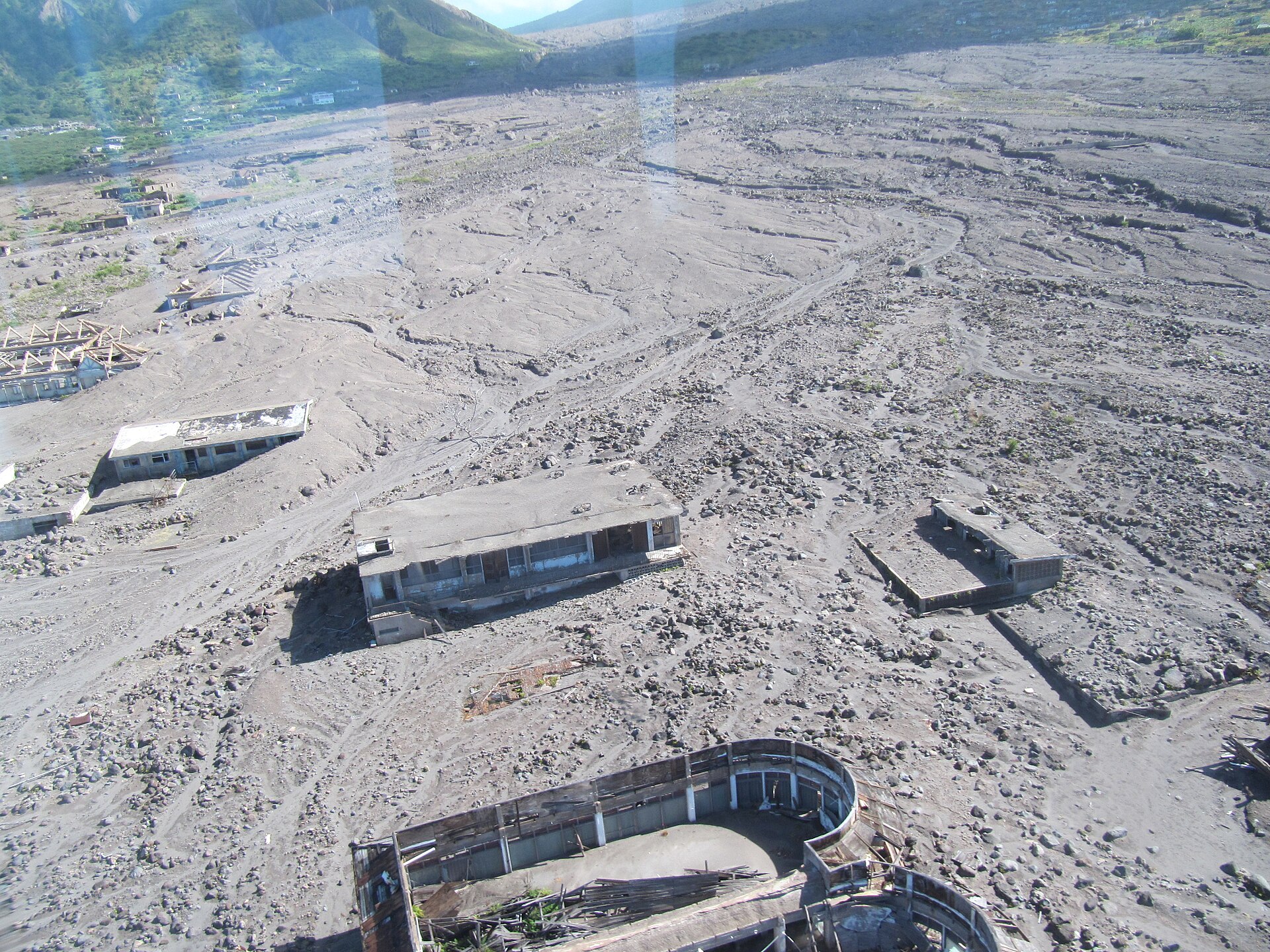
In July 1995 Soufrière Hills erupted for the first time in recorded history. Plymouth was evacuated between 1995 and April 1996. Eruptions on 4–8 August 1997 destroyed about 80% of the town and buried it under roughly 1.4 metres of ash with the density of concrete. Plymouth remains the de jure capital of Montserrat under British law, but is uninhabited and lies within a permanent exclusion zone. About two-thirds of the island’s pre-eruption population of ~12,000 left for good, mostly to the United Kingdom.
Worth remembering
- Plymouth was Montserrat's only port, commercial centre and seat of government for over three centuries; settled largely by Irish Catholics in the 1630s, it gave the island an unusually Irish-flavoured Caribbean culture.
- The eruptions that destroyed it were the first in Montserrat's recorded history; about two-thirds of the island's ~12,000 people emigrated permanently, mostly to the UK, leaving one of the smallest populated territories in the world.
Gallery
Further reading
Sources
- Plymouth had about 4,000 inhabitants before evacuation; the final evacuation came in 1996, and the eruptions of 4–8 August 1997 destroyed ~80% of the town under about 1.4 metres of ash. Wikipedia
- The Soufrière Hills volcano began erupting in July 1995, the first eruptions in recorded Montserratian history. Encyclopaedia Britannica
- Plymouth remains the de jure capital of Montserrat despite being uninhabitable, while Brades serves as the administrative centre. Wikipedia
A graveyard tradition: leave a stone to show you came, and remembered.