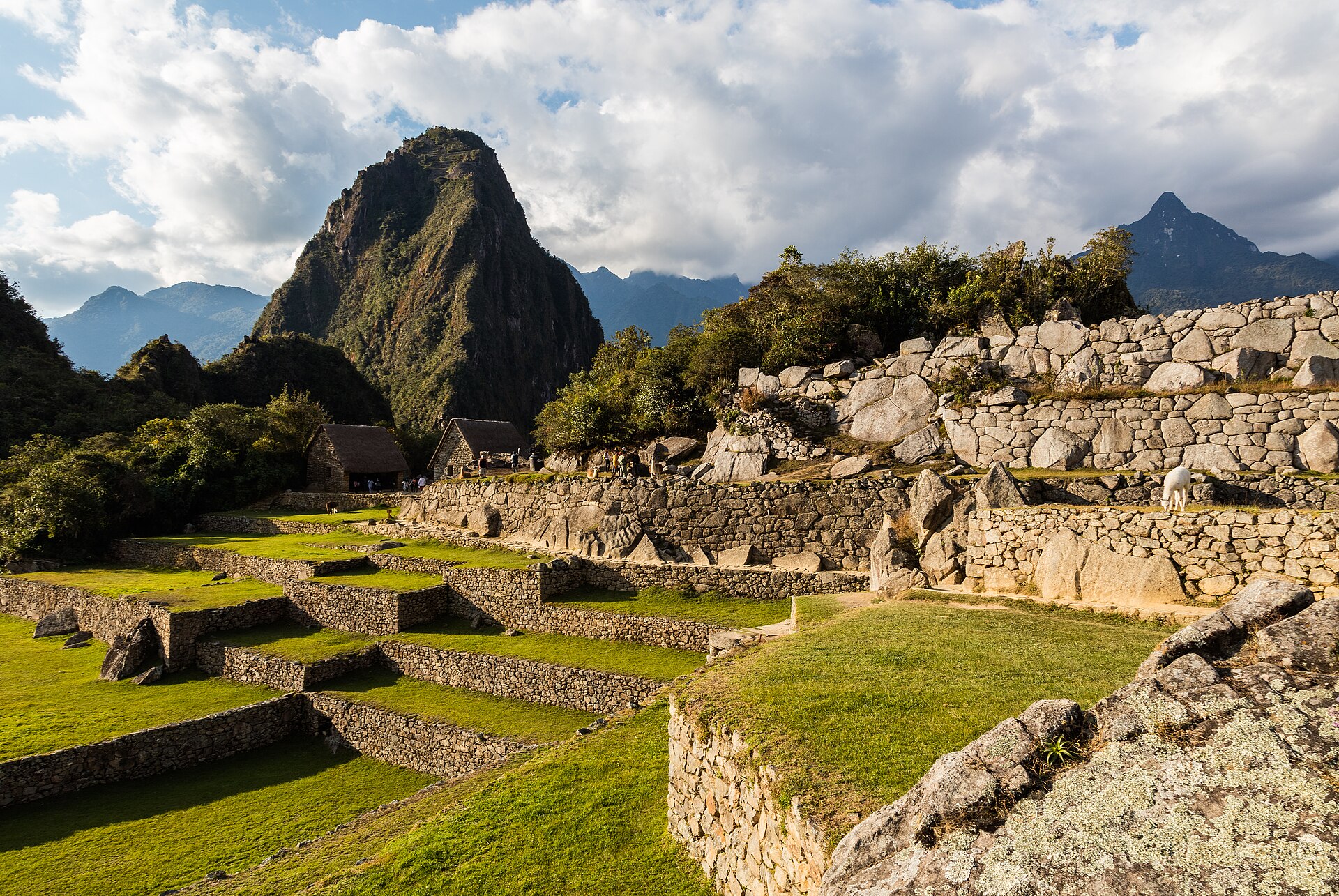
Tawantinsuyu, “the four parts together,” was the largest empire ever built in the Americas — some two million square kilometres along the spine of the Andes, across what is now six countries. It ran without the wheel, without money, and without writing, held together instead by a 40,000-kilometre road network and a system of knotted cords for keeping records. Under the emperor Pachacuti, in under a century it had grown from a single valley around Cusco into a superstate.
It came apart in a single year, against fewer than 200 men. Francisco Pizarro arrived to find the empire already weakened by a civil war between two royal brothers, Atahualpa and Huáscar, and by smallpox — which had raced down from Mesoamerica ahead of the Spanish and killed the previous emperor. At Cajamarca in 1532, Pizarro’s ~168 soldiers ambushed and captured Atahualpa. The emperor filled a room with gold and two with silver for his ransom; the Spanish took it and executed him anyway, in 1533. The road network outlasted the empire by centuries.
Worth remembering
- It ran without money, the wheel, or writing — yet administered millions through quipu, knotted cords that encoded numbers and records.
- Its ~40,000 km of mountain roads included woven-grass suspension bridges that communities rebuild by hand to this day.
The people
-
Pachacuti — Founder-builder, r. 1438–c. 1471
Turned the Cusco city-state into Tawantinsuyu and is traditionally credited with ordering Machu Picchu.
-
Atahualpa — Last Sapa Inca, c. 1502–1533
Won the civil war, filled a room with gold as ransom, and was garroted by the Spanish anyway.
-
Francisco Pizarro — Conquistador, c. 1471–1541
Led the ~168-man force that captured Atahualpa and toppled the empire; founded Lima.
Gallery
Watch
Further reading
Sources
- Inca Empire (1438–1533), largest in pre-Columbian America; fell to Pizarro amid civil war and smallpox Wikipedia
- At Cajamarca in 1532, ~168 Spaniards captured the emperor Atahualpa Encyclopaedia Britannica
- The Inca civilization built the largest empire in the Americas, extending from Quito to Santiago along the Andes; its 40,000 km road system bound together a multi-million subject population speaking over 30 languages World History Encyclopedia
- Pizarro's capture of Atahualpa at Cajamarca in 1532 and the subsequent Spanish advance brought the Inca state to collapse within a year, with a rump state holding out at Vilcabamba until 1572 World History Encyclopedia
A graveyard tradition: leave a stone to show you came, and remembered.