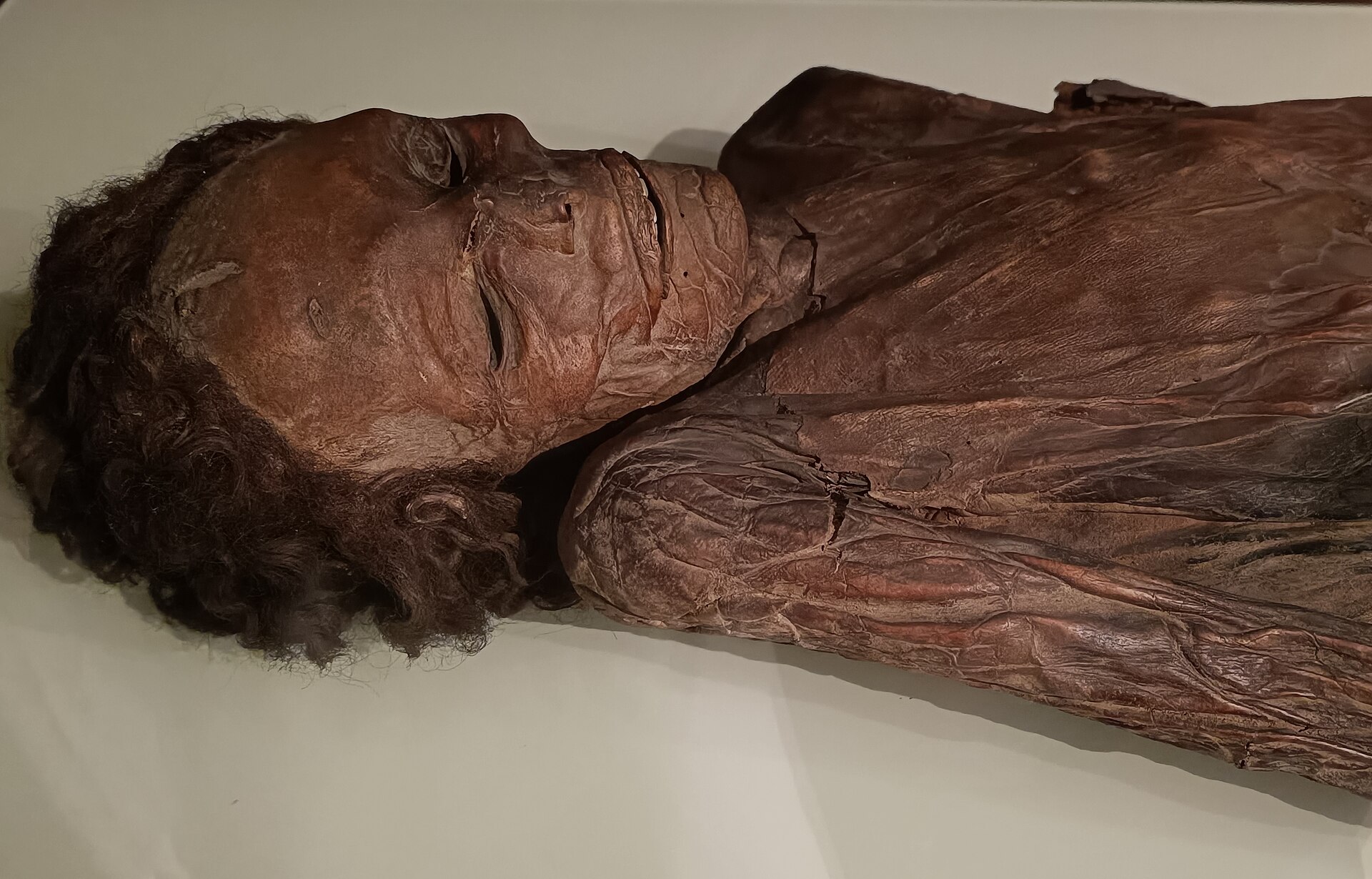
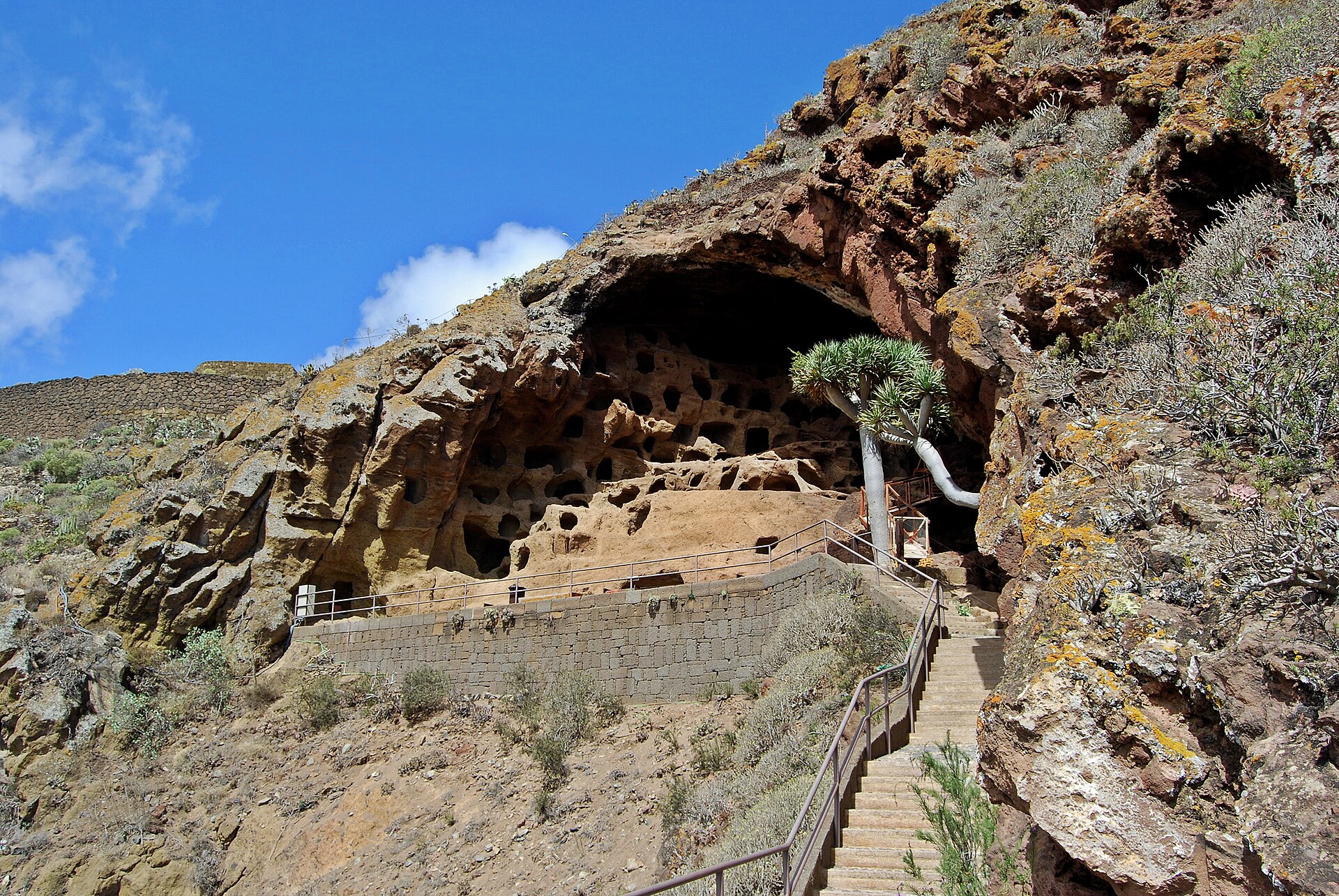
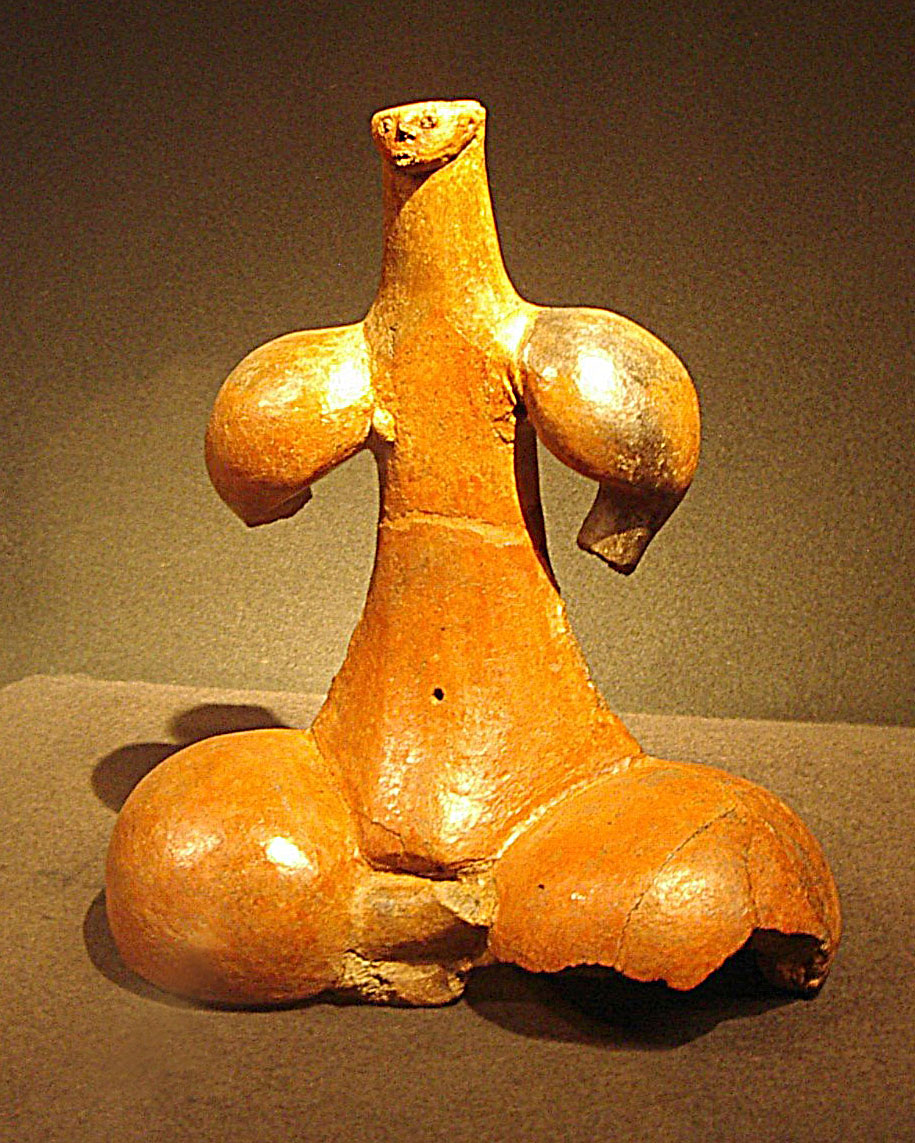
The Guanche were the indigenous people of the Canary Islands, thought to have arrived from North Africa at least two millennia before European contact. They lived in a Neolithic society without metal tools, seagoing boats or writing. Islands differed politically: Tenerife was split among nine menceyes (kings), Gran Canaria more centralised. They herded goats and pigs, grew grain, made pottery, and mummified their dead with techniques independent of the Old World.
Castile began the conquest in 1402 on Lanzarote and Fuerteventura. The populous western islands resisted for decades; at Tenerife in 1494 Guanche forces under Mencey Bencomo destroyed a Spanish army of about 900 at the First Battle of Acentejo, still called ‘La Matanza’. Spain returned in force and completed the conquest by 1496. The Guanche were enslaved, killed by epidemic disease, and absorbed by intermarriage within a generation; their language disappeared by the 17th century. Modern Canary Islanders carry an estimated 16–31% Guanche ancestry, but no Guanche community or living cultural tradition remains.
Worth remembering
- The Guanche of Tenerife were ruled by hereditary kings (menceyes); with no metalworking, boats or writing, they nonetheless mummified their dead in a process parallel to but independent of Egypt's, and hundreds of their mummies survive.
- Isolated for centuries with no iron weapons and no way to call for help, the Guanche still held out for 94 years (1402–1496), and at Tenerife in 1494 annihilated a full Spanish army before Spain returned in greater force.
The people
-
Bencomo — Mencey (king) of Taoro, Tenerife, d. c. 1496
He led the Guanche force that destroyed a Spanish army of about 900 at the First Battle of Acentejo in 1494 — 'La Matanza', the Slaughter — the largest Guanche victory, and died around the final conquest of Tenerife.
Gallery
Further reading
Sources
- The Castilian conquest ran from 1402 (Lanzarote) to the fall of Tenerife in 1496; at the First Battle of Acentejo (1494) the Guanche destroyed a Spanish army. Wikipedia
- Modern Canary Islanders carry an estimated 16–31% Guanche autosomal DNA; the Guanche language became extinct in the 17th century and the people no longer exist as a separate group. Wikipedia
- The Guanche kept a Neolithic culture with pottery and livestock and are now scarcely distinguishable in culture from the people of Spain. Encyclopaedia Britannica
A graveyard tradition: leave a stone to show you came, and remembered.