The Beothuk were the indigenous people of Newfoundland, hunter-gatherers who lived in small family bands along the coast and interior rivers. They hunted caribou, seals and salmon, built birch-bark canoes of a distinctive shape suited to rough offshore water, and applied red ochre — a religious and practical pigment — to nearly everything they owned. At European contact around 1497 their population was probably 500–700.
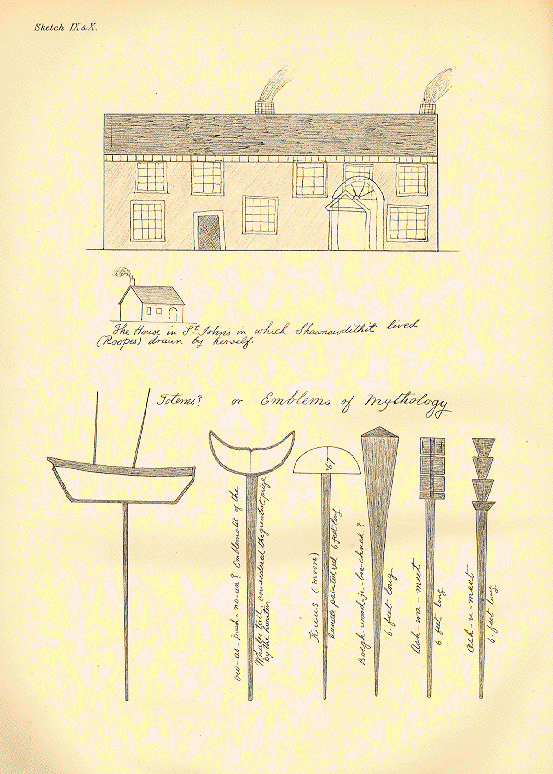
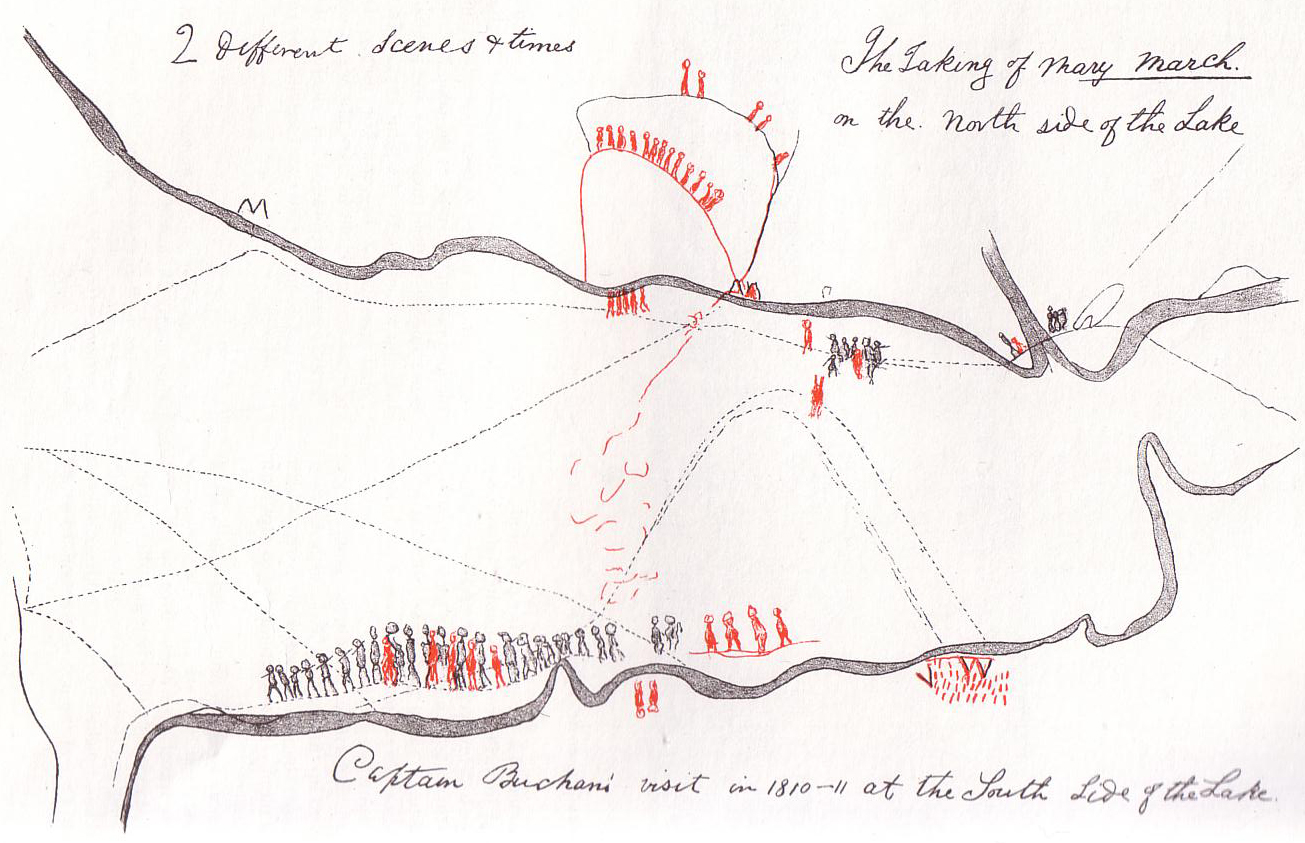
British colonisation steadily cut the Beothuk off from the coastal resources they depended on. Driven inland, they lost access to seals and saltwater fish; violence with settlers and trappers and epidemic tuberculosis reduced them to a handful by the early 19th century. The last known Beothuk, Shanawdithit, died on 6 June 1829 in St. John’s. Before her death she produced, in her years with William Cormack, drawings and oral testimony documenting her people’s history and ceremonies — the only sustained Beothuk first-person record. A few earlier survivors may have intermixed with the Innu of Labrador, but no confirmed Beothuk community or descendants are documented.
Worth remembering
- The Beothuk were expert mariners whose distinctive canoes, with a concave bottom and high bow, were used to hunt seals offshore; on land they funnelled caribou herds toward hunters using fences that ran for kilometres.
- Red ochre was central to Beothuk life — applied to skin, tools, canoes and the bones of the dead — and the pervasive colouring led colonists to coin 'Red Indians', a term that spread far beyond its narrow origin.
The people
-
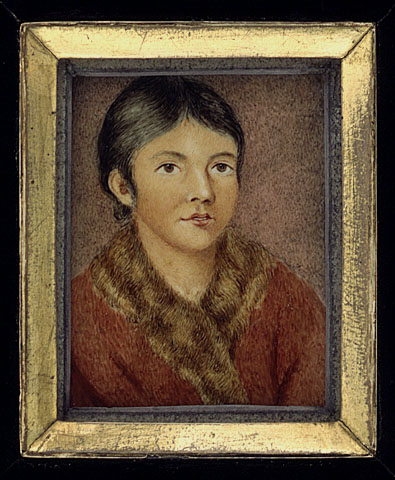
Shanawdithit — Last known member of the Beothuk, c. 1801–1829
Captured in 1823 with her mother and sister, who both died within weeks, she spent her last years with William Cormack, producing the drawings and oral accounts that remain the primary record of Beothuk life.
Gallery
Further reading
Sources
- Shanawdithit, the last known Beothuk, died on 6 June 1829 of tuberculosis in St. John's. Wikipedia
- The Beothuk numbered perhaps 500–700 at European contact and were destroyed by displacement from coastal food, violence and disease; a few survivors may have reached Labrador. Encyclopaedia Britannica
- The Beothuk applied red ochre to skin, homes, canoes and tools; the practice is one suggested origin of the term 'Red Indians'. Wikipedia
A graveyard tradition: leave a stone to show you came, and remembered.