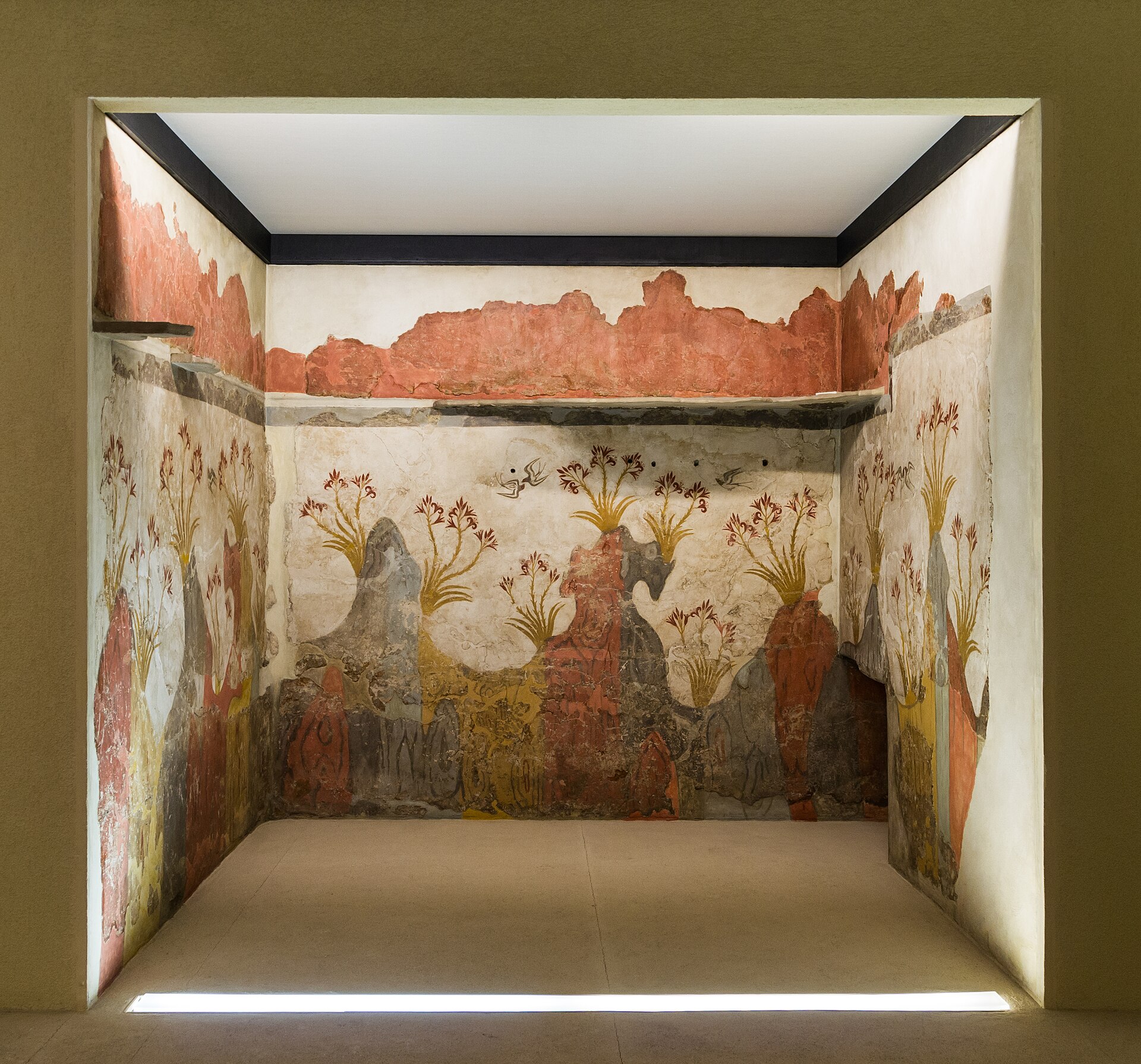
Akrotiri — the Bronze Age town on the southern coast of Thera (modern Santorini) that Spyridon Marinatos began excavating in 1967 — had been occupied since at least 4500 BCE. By roughly 2000–1650 BCE it was a prosperous Aegean trading hub, exporting pottery and textiles and importing goods from Minoan Crete, Egypt and Cyprus. Its multi-storey buildings were linked by paved streets with underground drainage, and nearly every interior wall carried elaborate frescoes whose mineral pigments survive today.
The Theran volcano erupted between about 1620 and 1530 BCE, one of the largest eruptions of the Holocene. Seismic warnings seem to have been enough: no human remains have been found, suggesting the people evacuated before the final blast. The eruption buried the town under tens of metres of pumice, preserving it in conditions comparable to Pompeii. Systematic excavation began only in 1967 and continues; roughly half the site is still buried.
Worth remembering
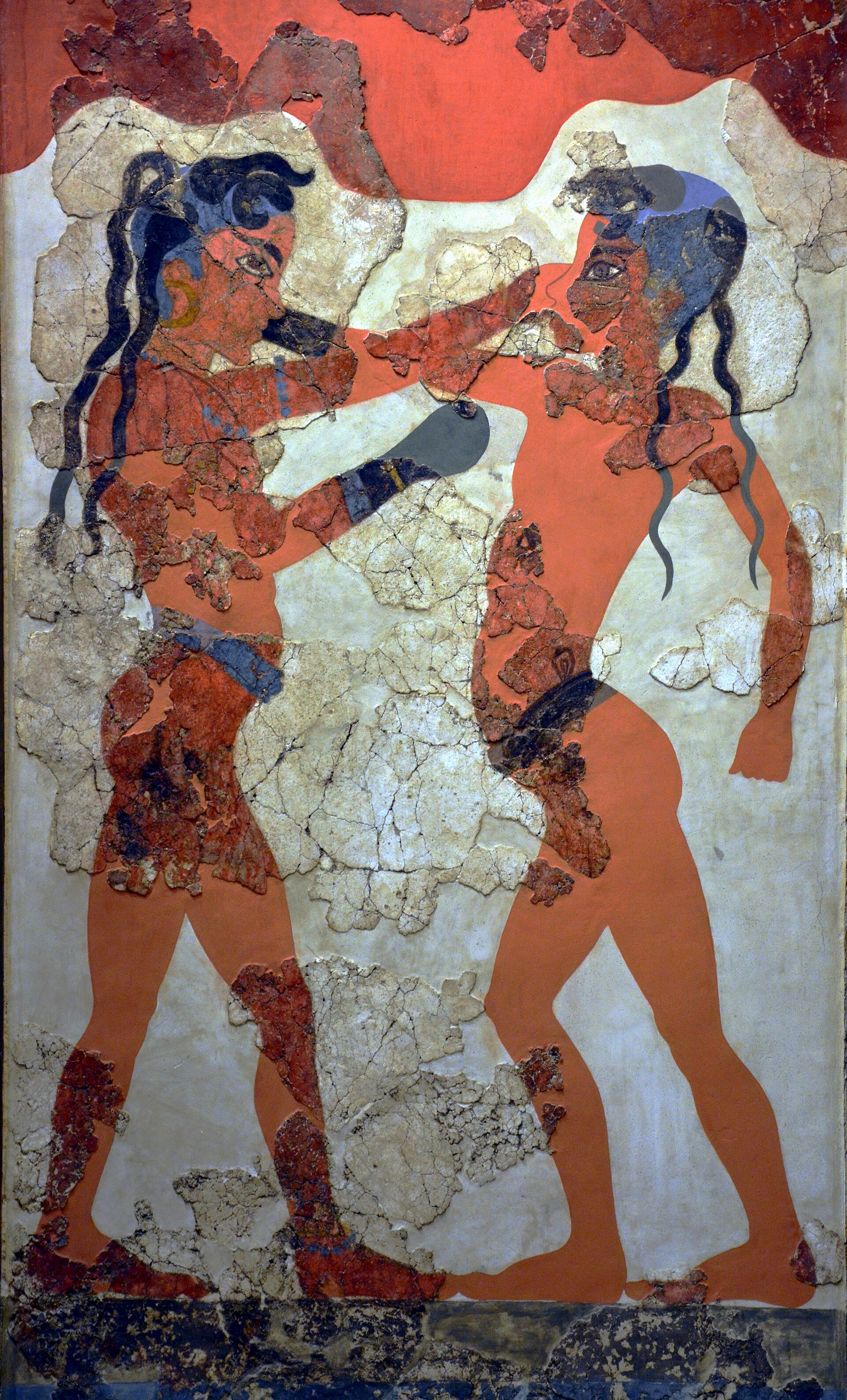
- Akrotiri's houses rose two to three storeys with internal staircases and walls painted with some of the finest frescoes of the Bronze Age — the Spring Fresco, the Boxing Boys and a miniature fleet fresco of a sea voyage.
- The town had working drainage and sewage, stone-paved streets wide enough for carts, and craft production in pottery, metal and textiles, with imports showing active long-distance trade.
The people
-
Spyridon Marinatos — Archaeologist who began the modern excavation, 1901–1974
Marinatos began systematic excavation of Akrotiri in 1967, revealing multi-storey buildings with frescoes intact; he died on the site in 1974 after a fall and is buried within the excavation.
Gallery
Watch
Further reading
Sources
- Akrotiri was buried by the Theran eruption c. 1620–1530 BCE; no uninterred human remains have been found, indicating evacuation preceded the final eruption. Wikipedia
- Excavations revealed multi-storey buildings, paved streets, extensive drainage and walls covered in frescoes; imported goods came from Crete, Egypt and Cyprus. World History Encyclopedia
- The site has been occupied since at least 4500 BCE and reached urban sophistication c. 2000–1650 BCE, among the most important Bronze Age sites in the Aegean. Encyclopaedia Britannica
A graveyard tradition: leave a stone to show you came, and remembered.