A silver leviathan that promised luxury flight across oceans, until the Hindenburg burned at Lakehurst in 1937 and a single hydrogen fireball took the dream out of the sky.
Born
1900 CE
Died
1937 CE
Lived
37 years
Dead for
89 yrs
At its peak
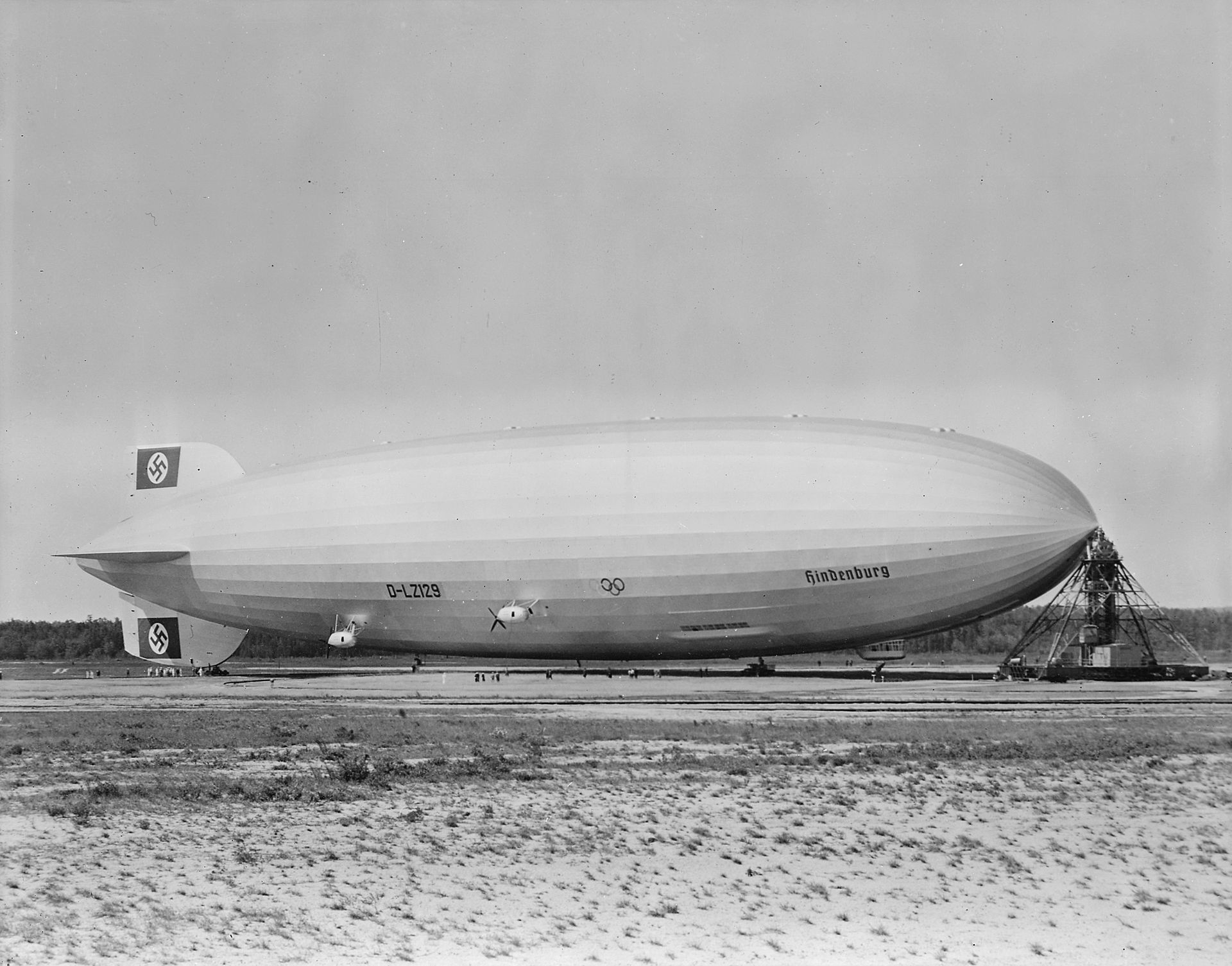
Hindenburg was 245 m long, the largest aircraft ever flown
Cause of death
Disaster · Replaced
Replaced by
The long-range fixed-wing airliner
The Obituary
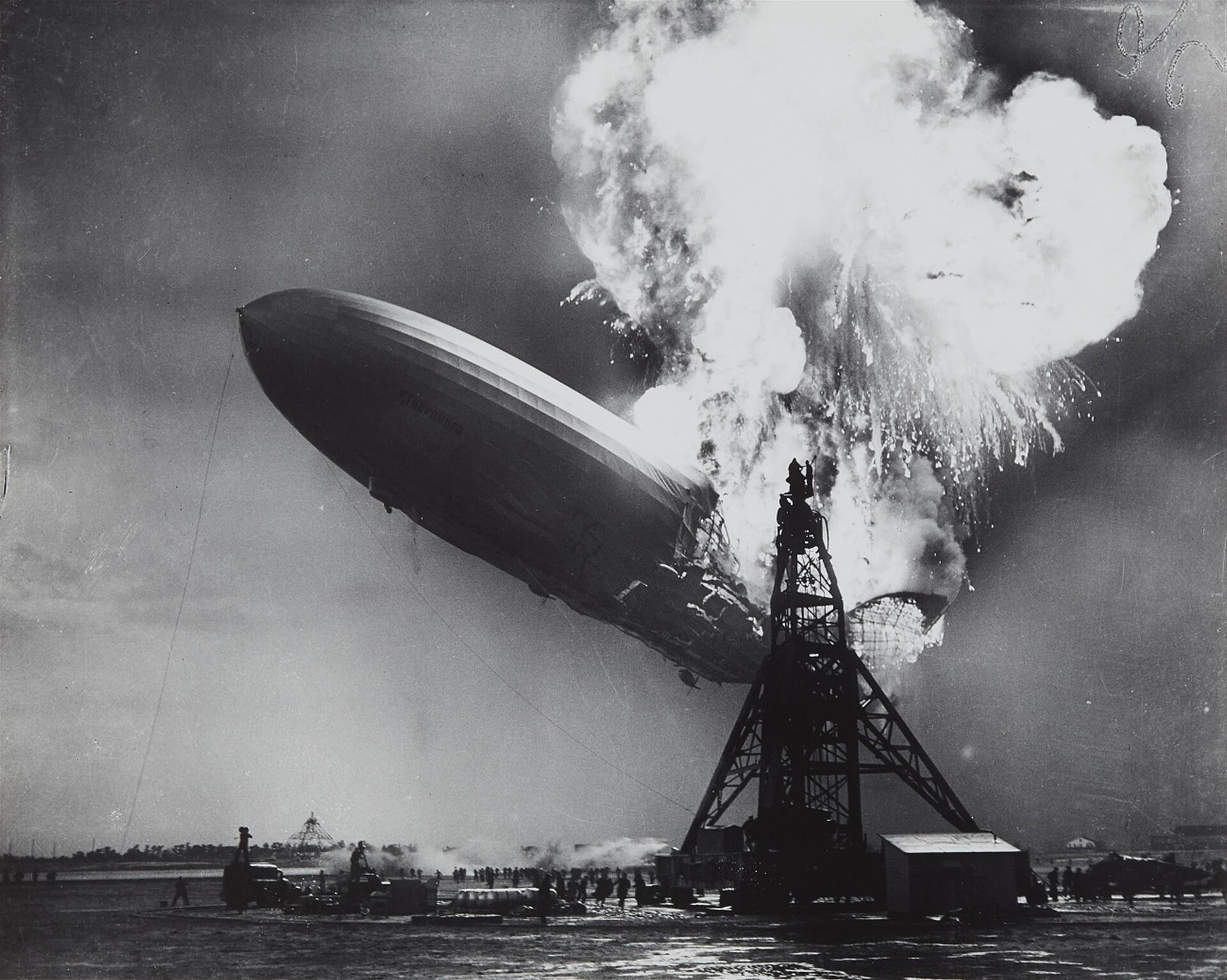
The rigid airship was the first machine to carry passengers in comfort across oceans. Count Zeppelin’s LZ 1 flew in 1900, and by the 1920s and 30s vast hydrogen-filled craft like the Graf Zeppelin and the 245-metre Hindenburg offered dining rooms and staterooms aloft, crossing the Atlantic in days. The flaw was the lifting gas: hydrogen burns. On May 6, 1937, the Hindenburg caught fire while landing at Lakehurst, New Jersey, killing 36 in a blaze captured on film and live radio. Public trust evaporated, and faster, safer aeroplanes finished what the fire began.
Worth remembering
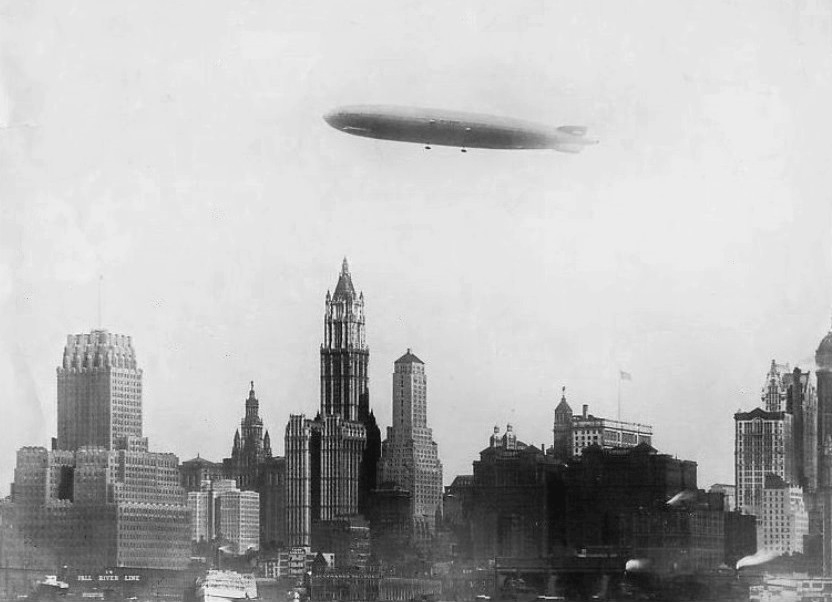
The Graf Zeppelin circled the globe in 1929 and flew over a million miles without a fatality.
The Hindenburg's destruction, filmed and broadcast live on radio, killed 36 and shocked the world.
Gallery
The German zeppelin Hindenburg on fire at the mooring mast at Lakehurst, New Jersey, 6 May 1937Public domainThe Graf Zeppelin airship flying over New York City on its first transatlantic voyage in 1928Public domain
Watch
The Hindenburg disaster — real footage, 1937 — British Pathé
Sources
LZ 1 flew in 1900; the Hindenburg disaster occurred May 6, 1937 Wikipedia
The Hindenburg caught fire and killed 36 people at Lakehurst, NJ Wikipedia
The Graf Zeppelin flew 590 flights including 144 ocean crossings before the Hindenburg disaster ended passenger airship operations in 1937 Britannica
The Hindenburg fire at Lakehurst, NJ on May 6, 1937 killed 36 people and effectively ended the era of passenger rigid airships National Air and Space Museum
A graveyard tradition: leave a stone to show you came, and remembered.
Buried nearby — by shared fate or a neighbouring lifespan.