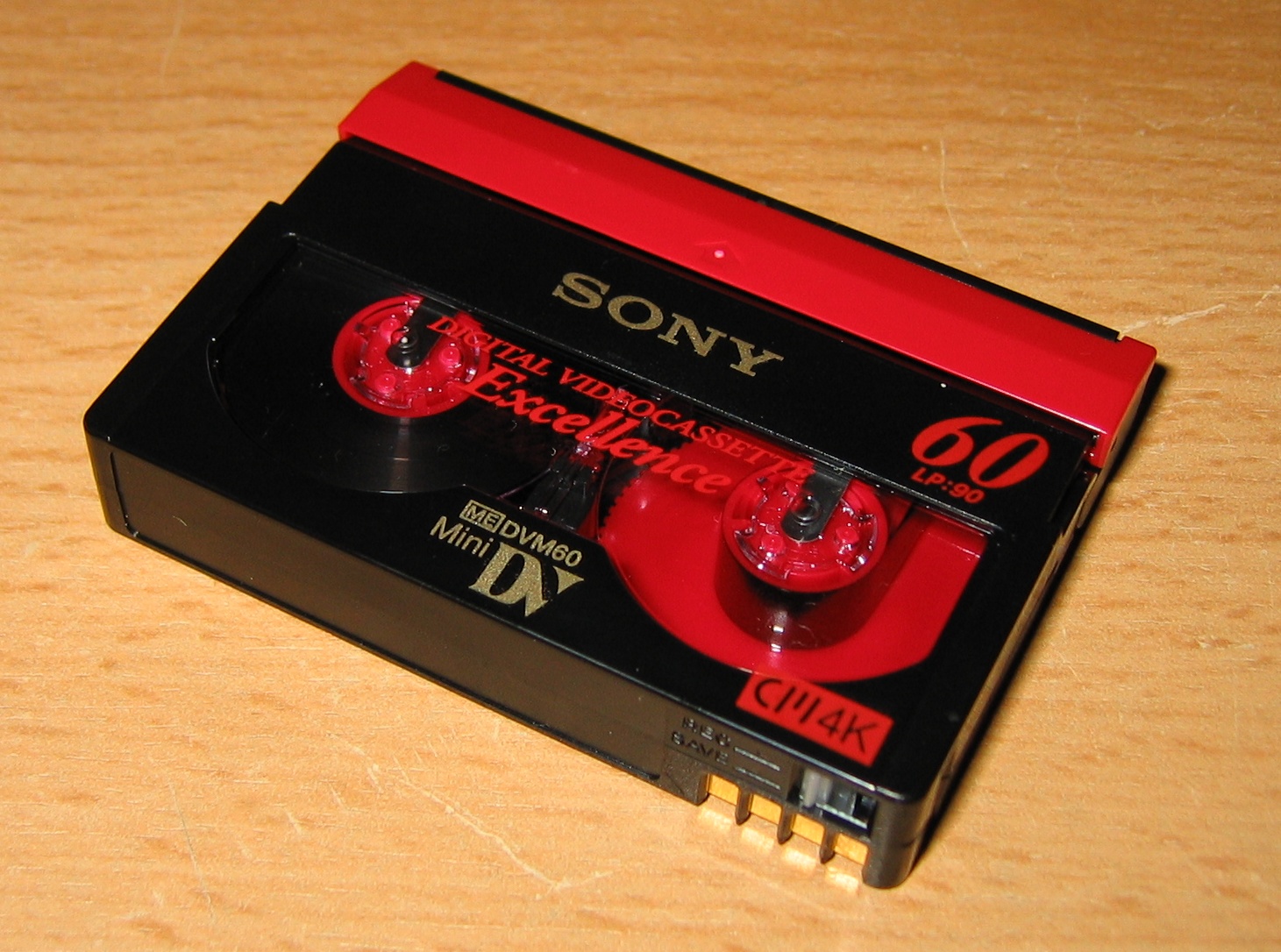
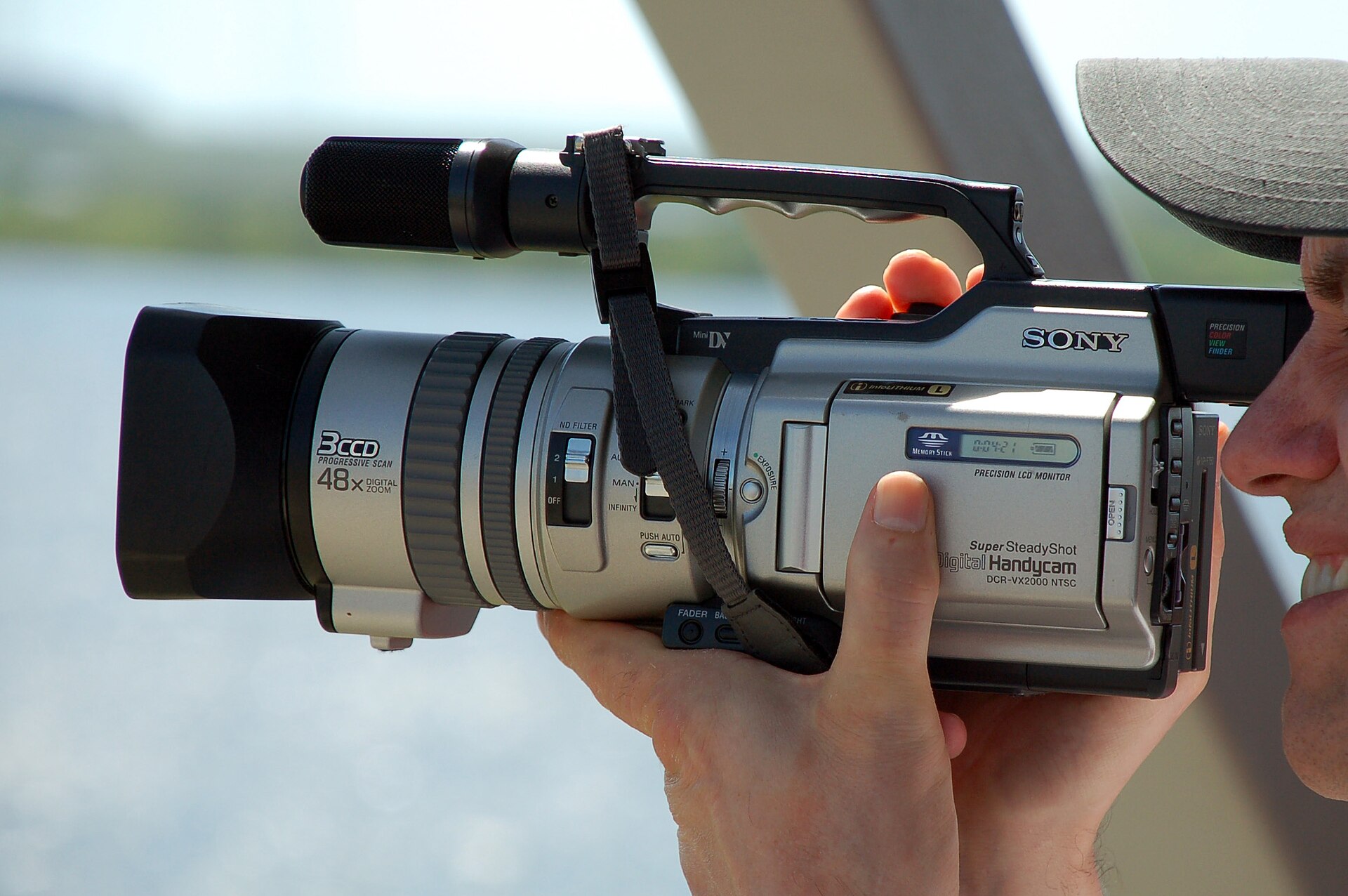
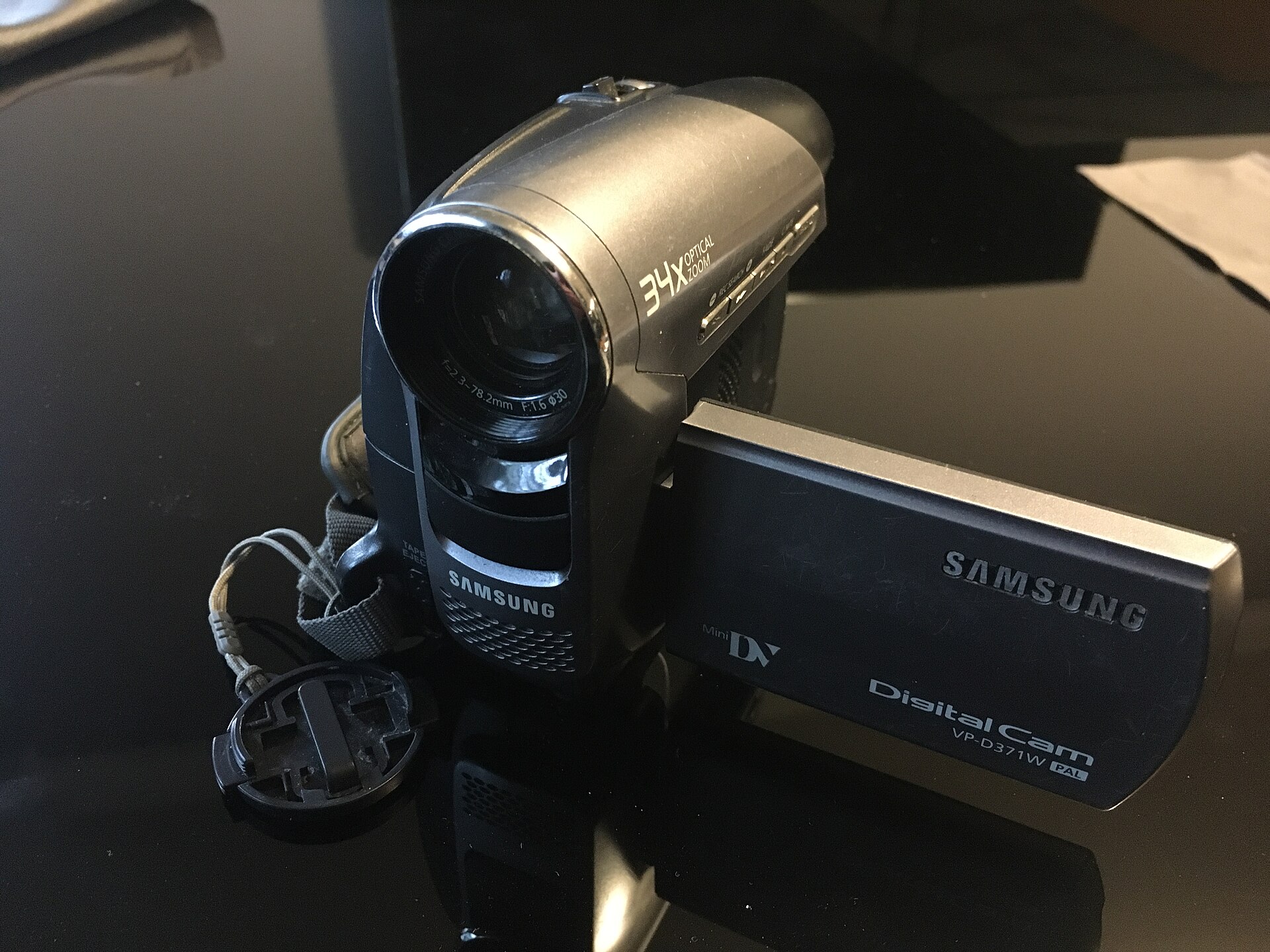
MiniDV was a consumer digital video cassette co-developed by Sony and Panasonic, launched in 1995 with camcorders arriving in 1996. The cassettes were far smaller than VHS or Hi8 and recorded compressed digital video at around 25 Mbps using a codec standardised across makers, so footage was broadly interchangeable between brands. Picture quality clearly beat contemporary analog formats, and a FireWire connection enabled lossless transfer to editing software. Documentary makers, video journalists and indie directors adopted it alongside ordinary families, making MiniDV one of the few formats to span amateur and professional use.
The decline came from two directions. DVD camcorders offered discs playable without a computer; hard-drive camcorders offered instant random access. Flash memory then collapsed both into a format smaller than the cassette itself — no rewinding, no moving tape to fail, hours of footage on a cheap card. By the late 2000s most makers had dropped MiniDV lines, and its professional HDV niche gave way to solid-state cards by 2010. Surviving tapes now play only on increasingly scarce working machines, leaving a real archival problem for a decade of footage.
Worth remembering
- MiniDV recorded a standardised DV codec, so footage from one maker's camcorder could be edited with software built around any other's — rare cross-brand compatibility.
- Its FireWire connection allowed lossless transfer from camcorder to computer with no generation loss, making MiniDV the standard for desktop video editing in the early 2000s.
Gallery
Sources
- MiniDV was introduced in 1995 and became popular quickly; its decline began as hard drives and SD cards replaced tape in the late 2000s. EverPresent
- The DV format and MiniDV were the last tape-based consumer video cassettes before SD-card recording replaced them. Wikipedia
- MiniDV, introduced in 1995, looks like a shrunken VHS tape and was replaced by SD-card camcorders. Legacybox
A graveyard tradition: leave a stone to show you came, and remembered.