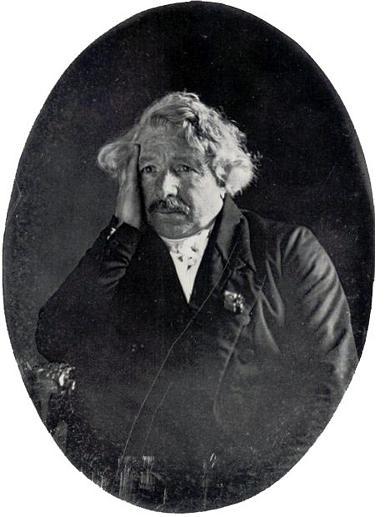
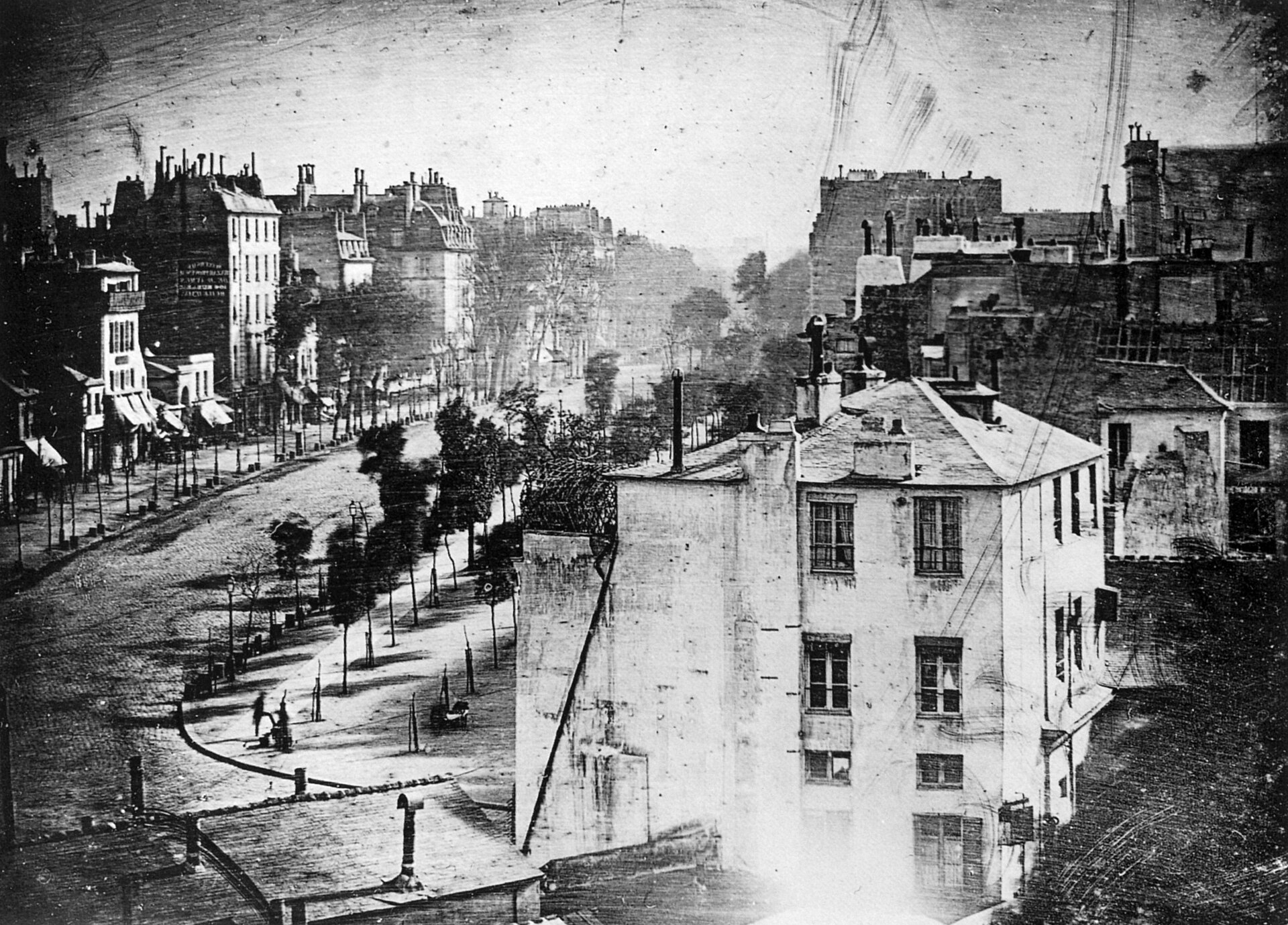
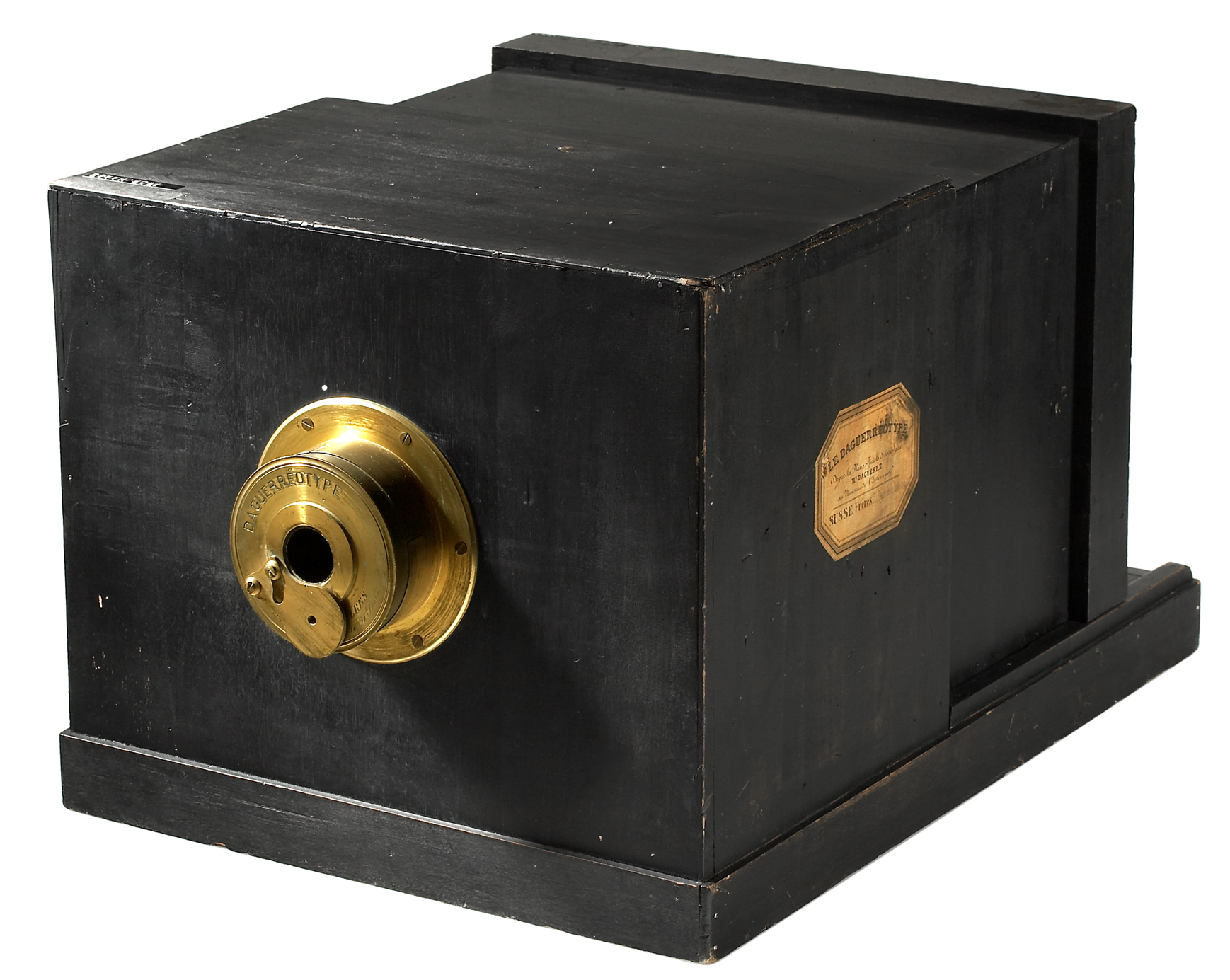
The daguerreotype was announced to the world on August 19, 1839, by Louis Daguerre and the French Academy of Sciences. The process coated a polished silver plate with light-sensitive silver iodide, exposed it in a camera, and developed the image in mercury vapour — producing a direct positive image of extraordinary detail that looked like a mirror with a captured scene. Within months, portrait studios opened across Europe and North America. By the early 1850s the process was the dominant form of commercial photography, with an estimated 3 million images produced annually in the US alone by 1853, primarily portraits at studios charging a dollar or two per plate.
The collodion process, introduced in 1851 by Frederick Scott Archer, offered two decisive advantages: it produced a glass-plate negative from which any number of paper prints could be made, and it cost less per image. By 1856 the daguerreotype was commercially marginal. By the early 1860s it was gone from studios almost entirely. The process had dominated photography for about 15 years — long enough to establish commercial portrait photography as a mass industry, create the visual record of the American Civil War’s early years, and set the technical expectations that all subsequent photography would have to meet.
Worth remembering
- A daguerreotype required exposures of 3–15 minutes in early 1839, long enough that portrait subjects had to hold metal neck braces to keep still; lens improvements by 1841 reduced this to under a minute.
- Each daguerreotype was a unique object — a direct positive on a silver-coated copper plate — with no negative, meaning the image could not be reproduced. This was not a minor inconvenience but a structural limitation that the collodion negative-and-print process directly solved.
Gallery
Watch
Sources
- By 1853, an estimated three million daguerreotypes per year were being produced in the United States alone; process almost completely superseded by 1856 by new, less expensive processes Wikipedia
- Daguerreotype supplanted by the wet collodion process during the mid-to-late 19th century Encyclopaedia Britannica
- Daguerreotype was displaced by the ambrotype and collodion process, which produced more readily viewable images at lower cost Wikipedia
A graveyard tradition: leave a stone to show you came, and remembered.