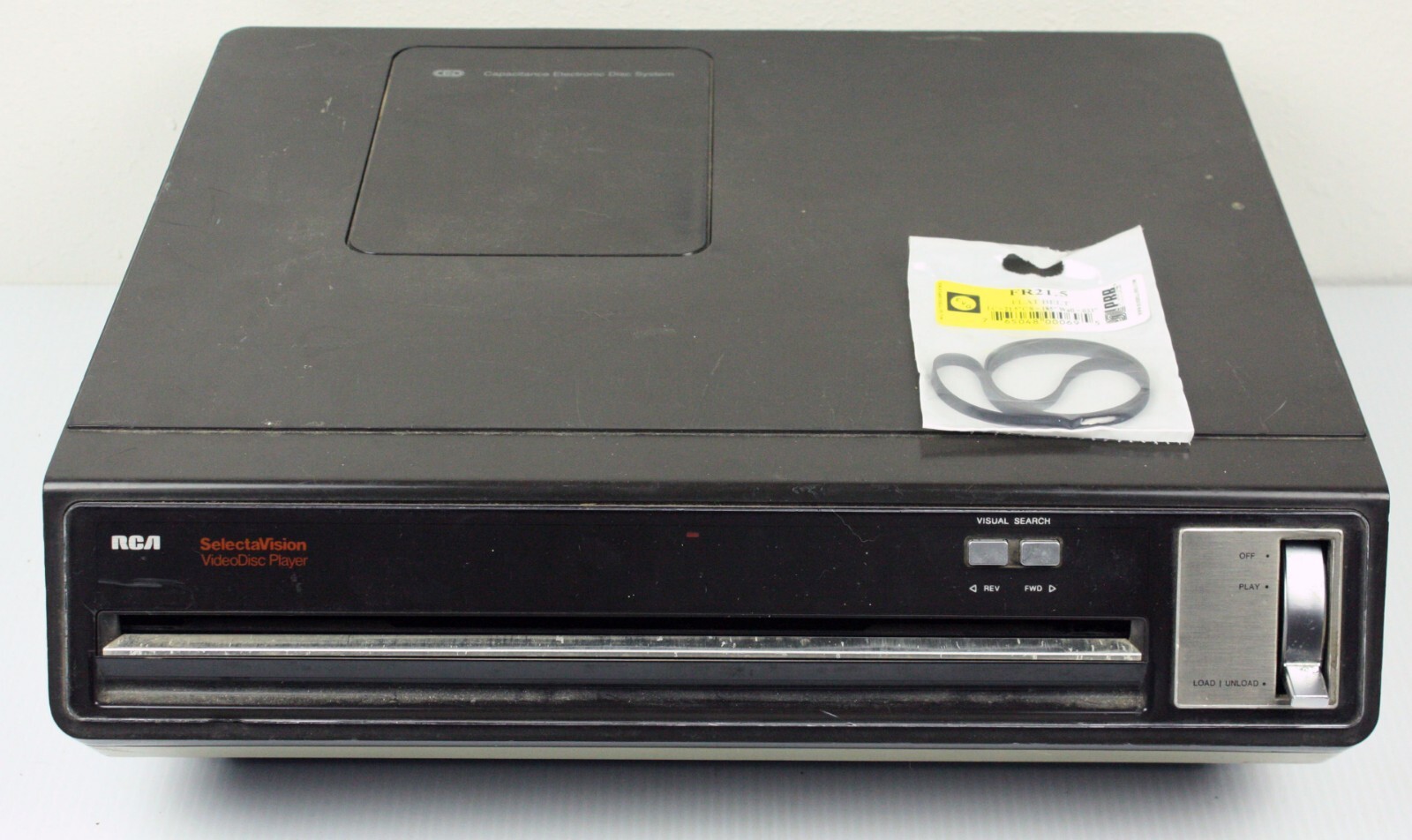
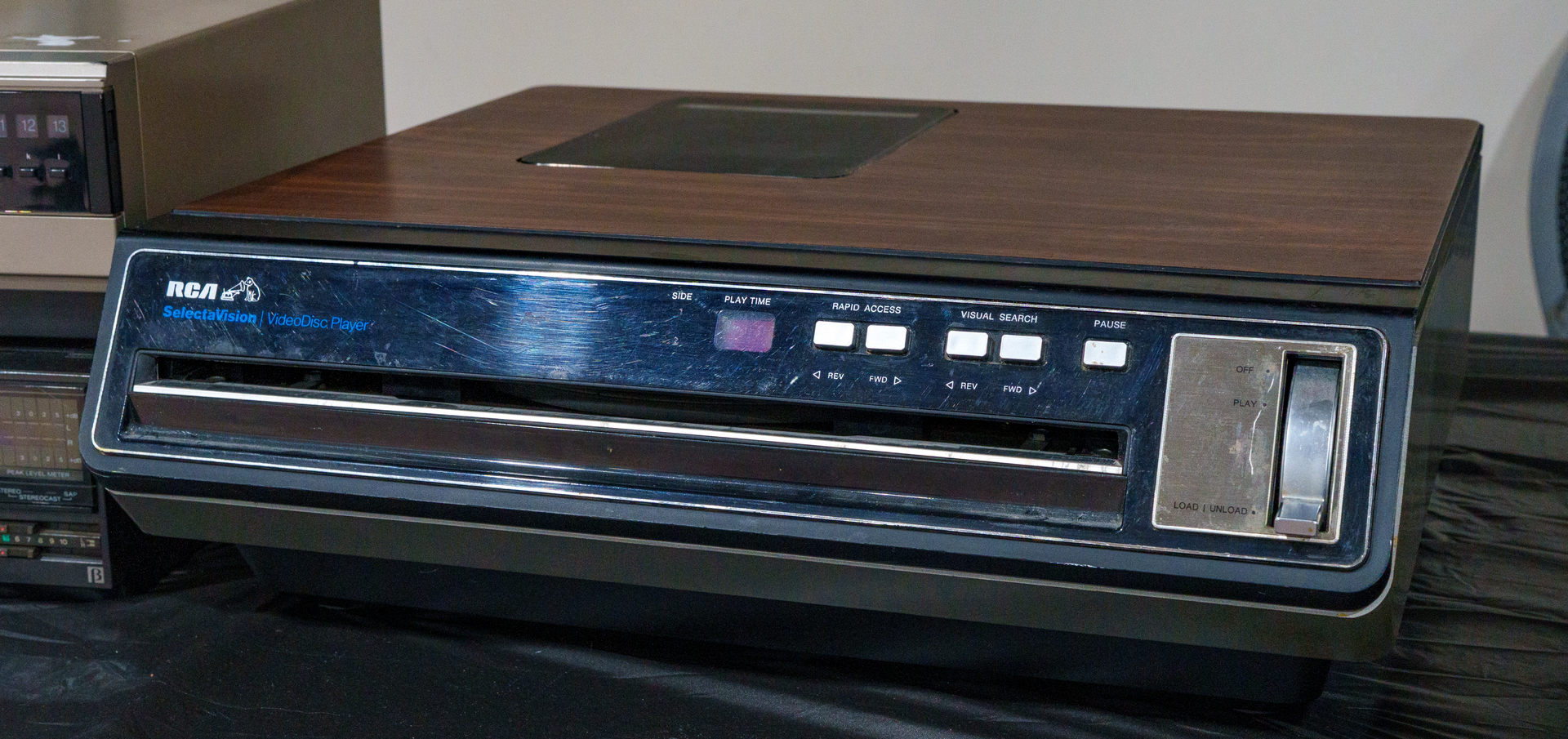
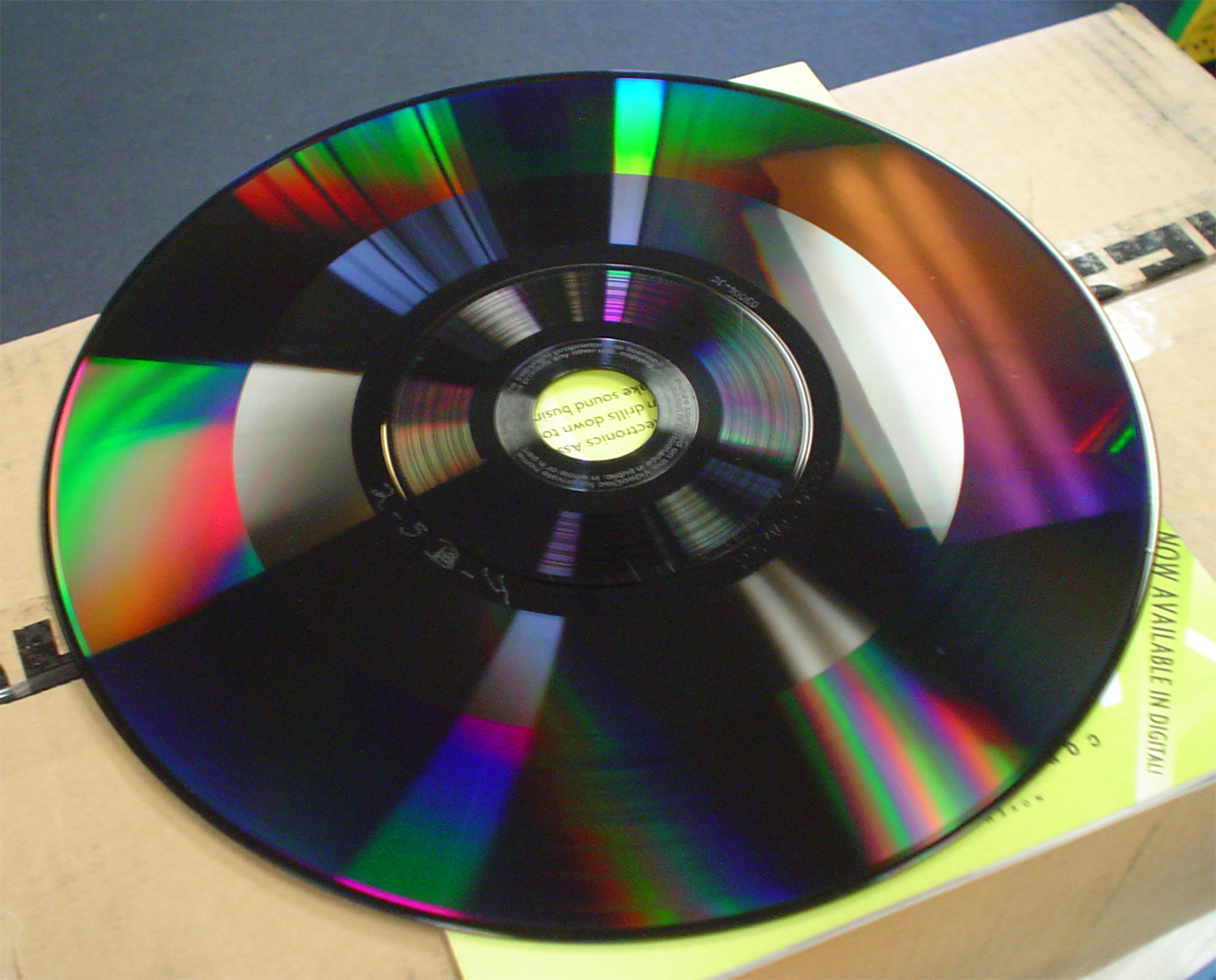
The Capacitance Electronic Disc was RCA’s home-video format: a 12-inch vinyl-like disc storing video and audio as capacitance variations read by a diamond stylus. Development began in 1964, and RCA spent seventeen years on it before launching the first player in March 1981. A stylus-based disc was cheaper to manufacture than laser-optical rivals, which was the logic for persisting with it. About 1,700 titles eventually appeared, covering most major films of the era, and discs sold reasonably even when players did not.
The problem was timing. VHS had launched in 1977 and dominated by 1981, and unlike CED it could record. CED discs needed mid-film flipping and could wear with repeated plays. RCA sold only about 100,000 players in 1981, half its projection, and never recovered. After price cuts failed, RCA pulled the plug in April 1984 having sold roughly 550,000 players and lost a fortune. General Electric absorbed RCA two years later, partly as a result. LaserDisc took the enthusiast market CED had aimed for, and DVD replaced everything in the late 1990s.
Worth remembering
- A CED disc looked like a vinyl LP in a protective caddy — you slid the caddy in and the player kept the disc; a diamond stylus rode grooves at 450 rpm, the fastest groove speed of any consumer disc format.
- A two-hour film needed two discs and a mid-movie flip on each, four interruptions in all, while VHS and Betamax played the same film straight through.
Gallery
Watch
Sources
- The CED player launched in March 1981; RCA discontinued it in April 1984 after selling about 550,000 players, with losses often estimated around half a billion dollars. Wikipedia
- RCA sold only about 100,000 players in 1981, roughly half its projection; total players produced were around 750,000 across all makers. CED Magic
- RCA discontinued SelectaVision in April 1984 after disappointing sales, and General Electric acquired RCA two years later. Encyclopaedia Britannica
A graveyard tradition: leave a stone to show you came, and remembered.