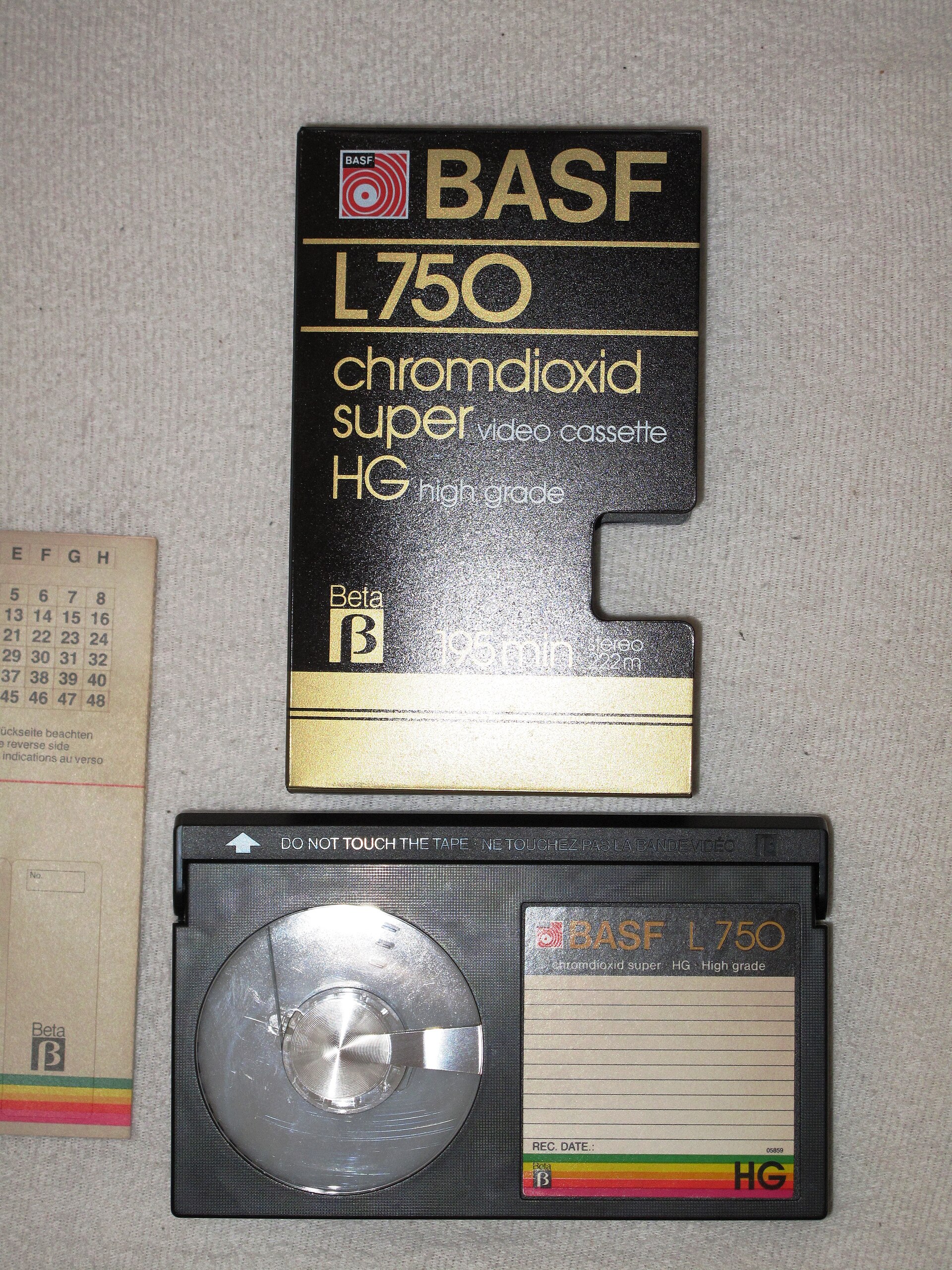
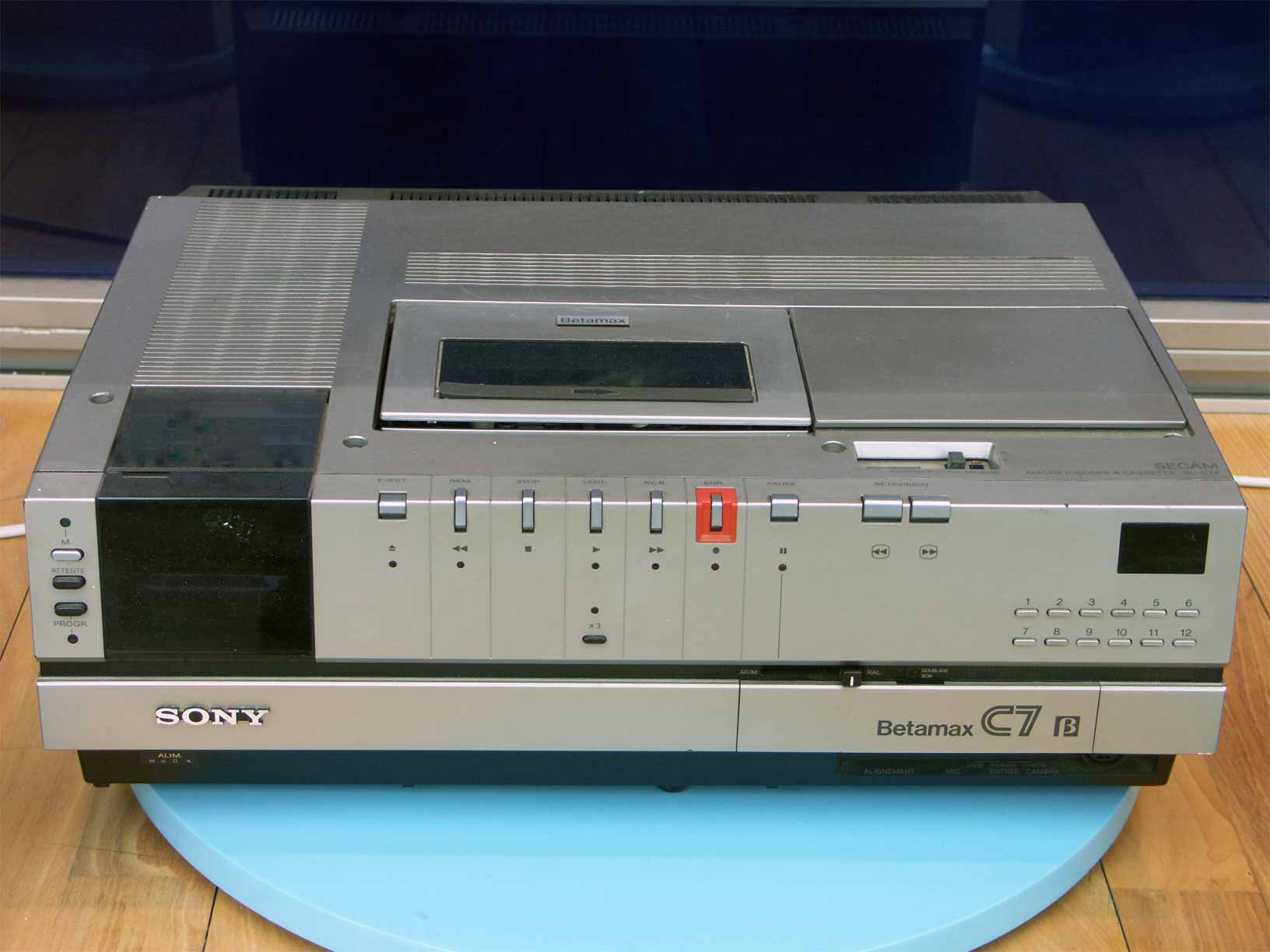
Betamax was Sony’s home videocassette format, launched in Japan in May 1975 and reaching US stores that November, only to lose the format war to JVC’s VHS. At its peak it offered genuinely better picture quality than VHS — higher resolution, more stable image, and superior audio on later models. By 1981 it held 25% of the UK market and was widely available in rental stores across North America and Europe.
The format war turned on recording time, distribution, and licensing. JVC’s VHS offered longer tape capacity at launch and aggressively licensed the format to dozens of manufacturers, building lower prices through competition. By 1980 VHS held 60% of the North American market. By 1984 the manufacturing ratio was 40 companies to 12. Sony acknowledged defeat in 1988 by producing VHS recorders alongside Beta, though it kept making Betamax hardware until 2002 and cassettes until 2016 — a 41-year run for a format officially dead since the mid-1980s.
Worth remembering
- Beta's picture quality was measurably sharper — 250 horizontal lines versus VHS's 240 — yet consumers chose the format with longer recording time and lower-priced rental options.
- Sony initially refused to broadly license Betamax technology, limiting manufacturing to 12 companies by 1984 against 40 producing VHS, a strategic miscalculation that sealed the format's fate.
Gallery
Watch
Sources
- By 1980 VHS controlled 60% of the North American market; by 1984, 40 companies made VHS equipment vs. Beta's 12 Wikipedia
- Betamax held 25% UK market share in 1981, dropping to 7.5% by 1986; Sony conceded in 1988 by producing VHS recorders Wikipedia
- Sony's Betamax was soon overwhelmed by the more popular VHS version Encyclopaedia Britannica
A graveyard tradition: leave a stone to show you came, and remembered.