An Indo-European language stranded in the Tarim Basin at the edge of China, whose Western words on Silk Road manuscripts startled the scholars who found them — until Turkic Uyghur settlers displaced it.
Died
900 CE
Dead for
1,126 yrs
Cause of death
Assimilation
Replaced by
Old Uyghur (Turkic)
The Obituary
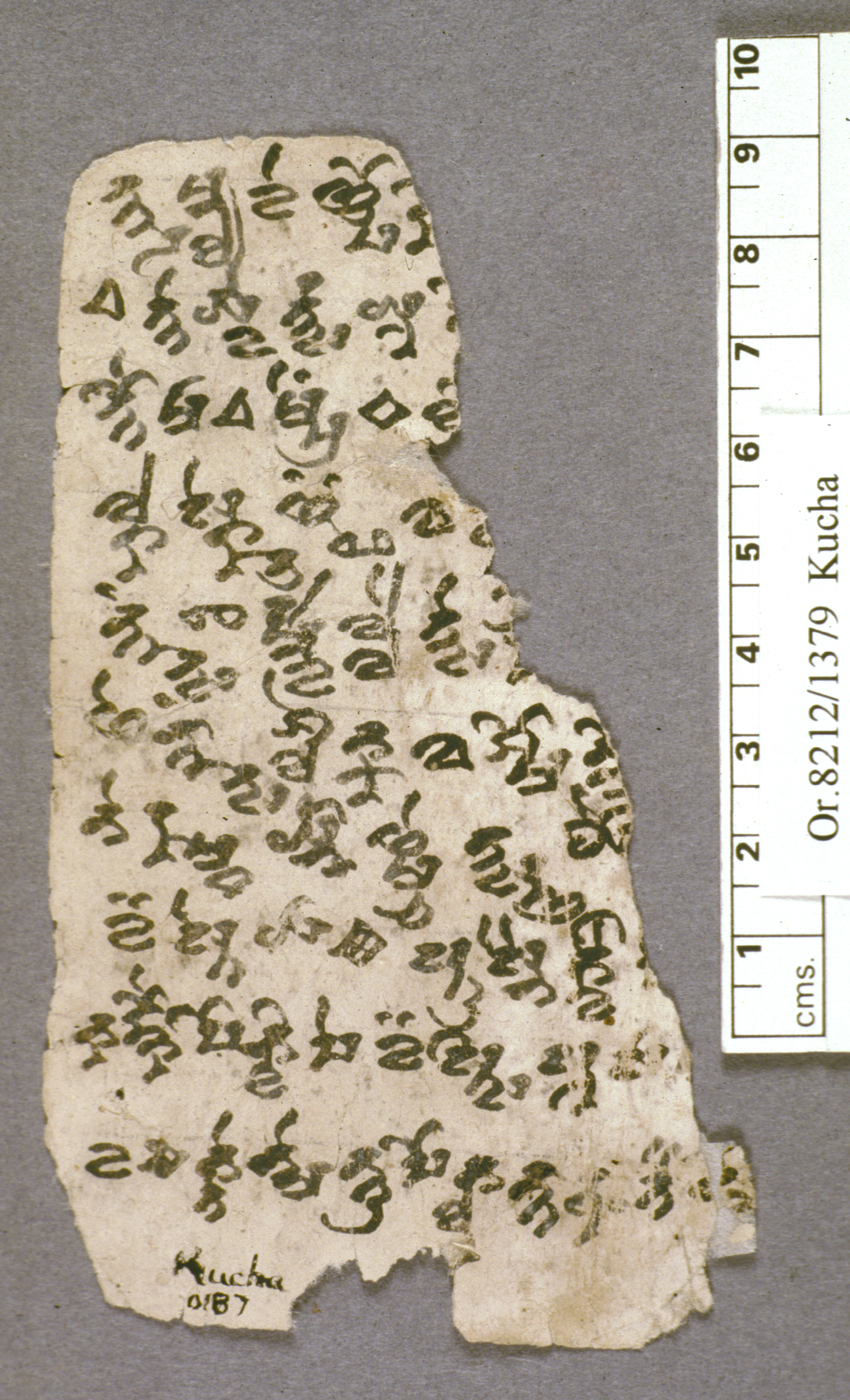
Tocharian was a branch of the Indo-European family spoken in the oasis towns of the Tarim Basin along the Silk Road, in two distinct dialects known as Tocharian A and B (the western dialect, Tocharian B, also called Kuchean after the oasis of Kucha), written in a script derived from Brahmi. Its survival in Buddhist manuscripts, mostly from the 6th to 8th centuries CE, astonished linguists when they were discovered around 1900, since the language sat at the far eastern fringe of a family centred thousands of miles west. As Turkic Uyghur peoples moved into the region, Tocharian declined and disappeared by roughly the 9th century.
Worth remembering
It was an Indo-European language spoken thousands of miles east of all its relatives, in what is now Xinjiang, China.
Its existence was unknown until manuscripts were unearthed in the Tarim Basin around 1890–1910.
Gallery
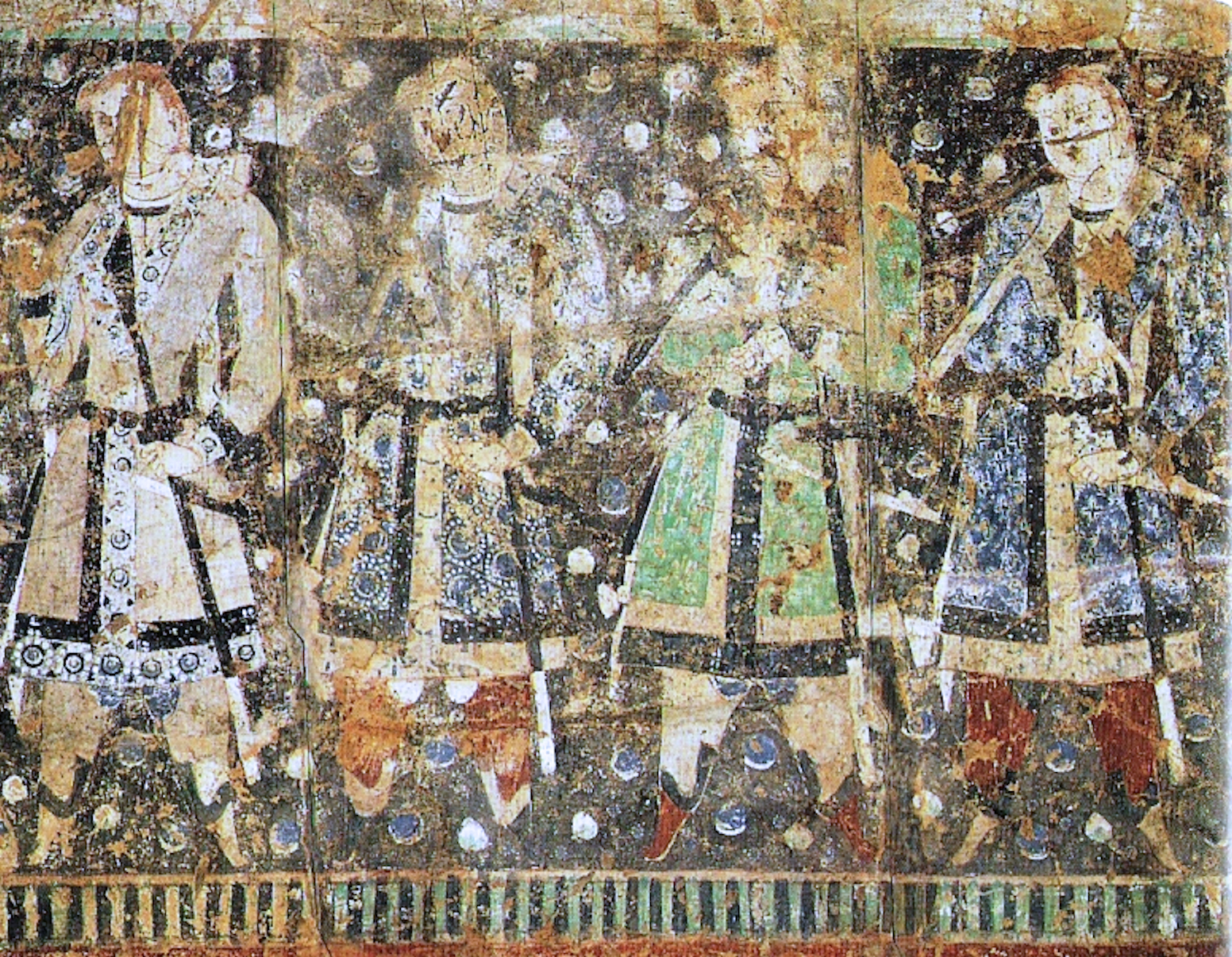
Wall painting of Tocharian princes as donors, Cave of the Sixteen Sword-Bearers, Kizil Caves, Tarim Basin, carbon-14 dated 432–538 CEPublic domain
Sources
Tocharian was an extinct branch of Indo-European spoken in the Tarim Basin, known from manuscripts in two dialects, A and B. Wikipedia
Tocharian manuscripts date mostly from the 6th to 8th centuries CE and were displaced by Turkic Uyghur. Encyclopaedia Britannica
Tocharian was spoken in oases on the northern edge of the Tarim Basin (now Xinjiang, China); it survived in two dialects — Tocharian A (liturgical, eastern) and Tocharian B (spoken, western/Kuchean) — written in an alphabet derived from Brahmi; manuscript fragments date from the 6th–8th centuries AD and the languages disappeared after Uyghur-speaking peoples settled the area in the 9th century. Omniglot
A graveyard tradition: leave a stone to show you came, and remembered.
Buried nearby — by shared fate or a neighbouring lifespan.