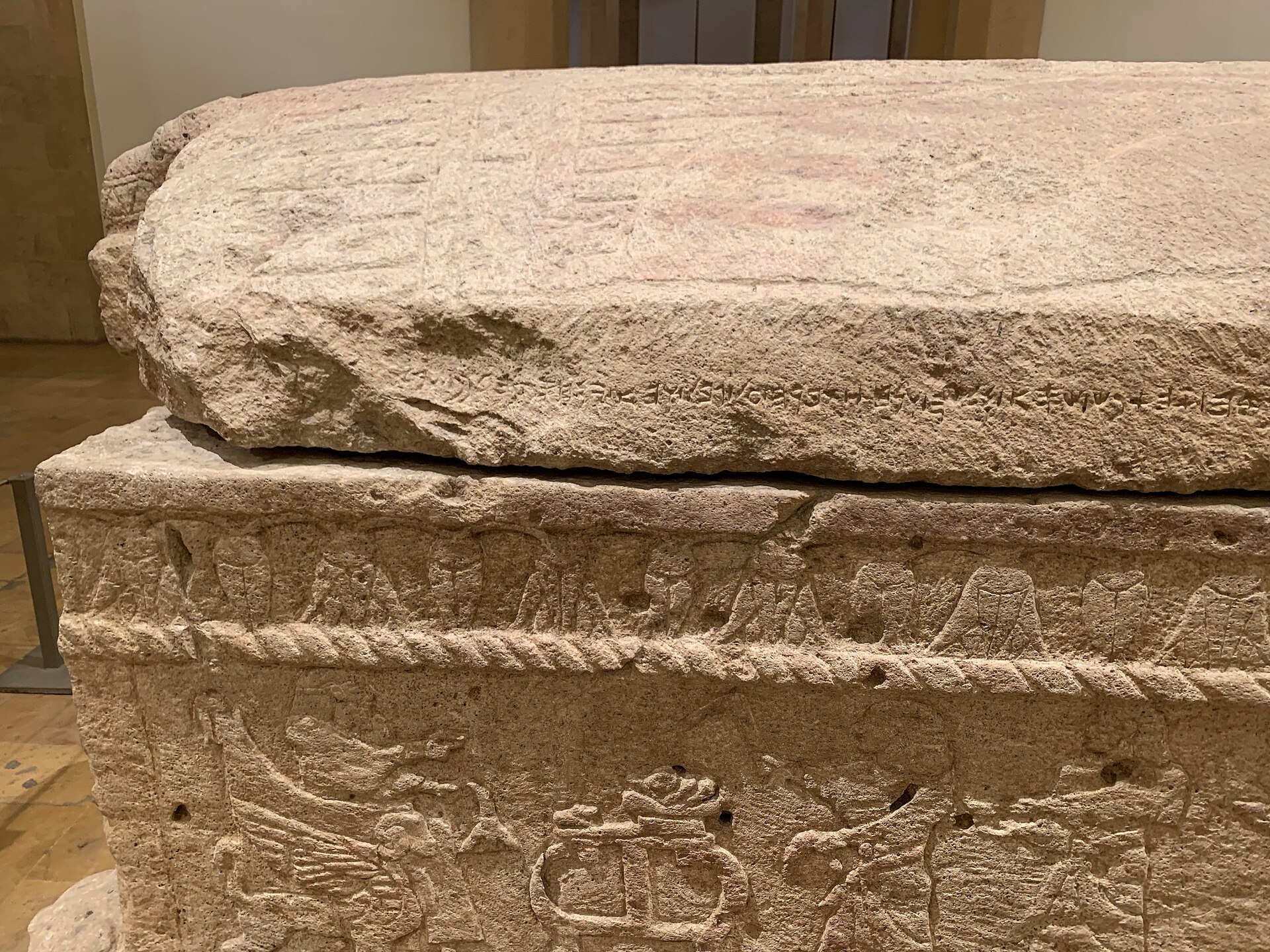
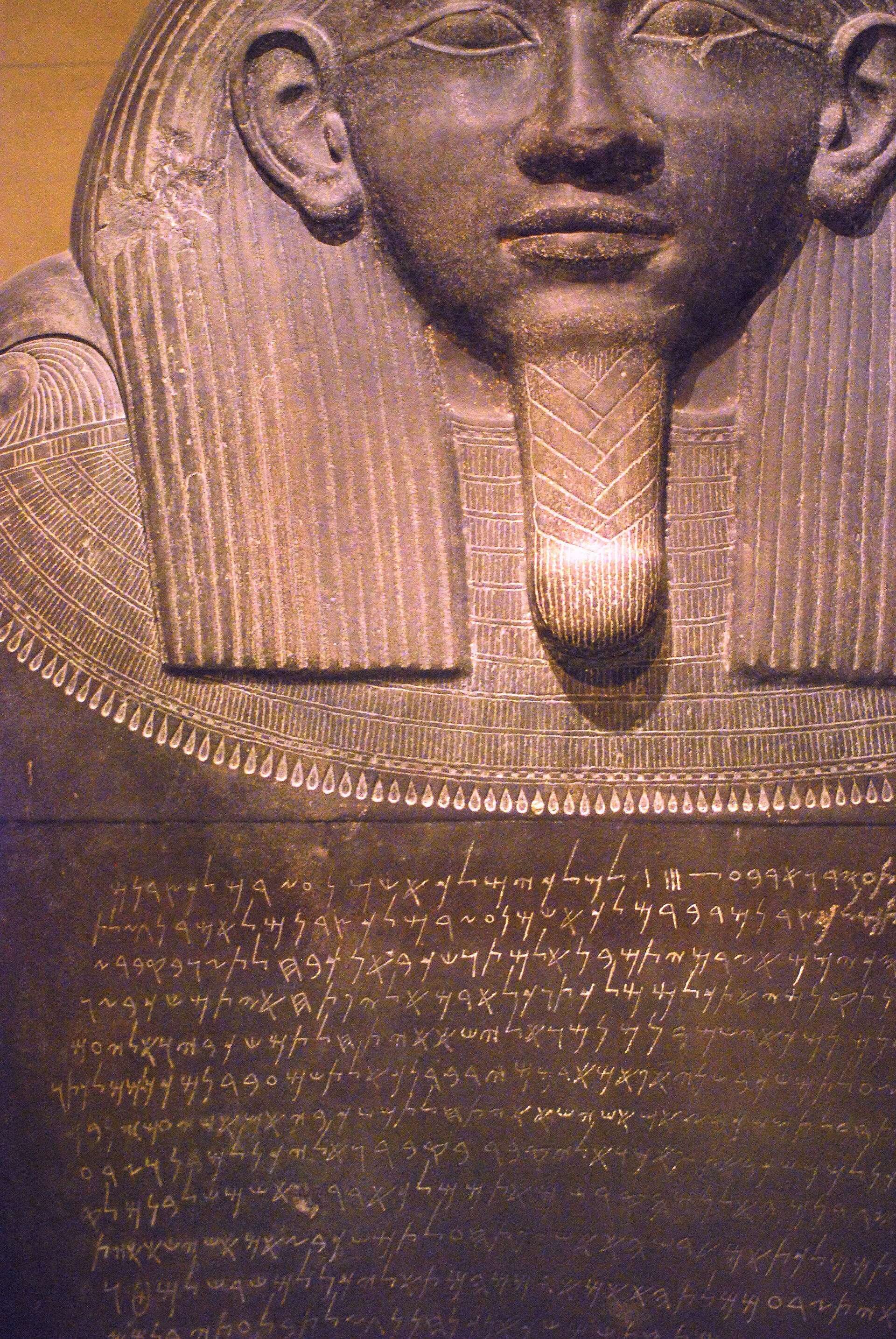
The sailors' tongue that gave the world its alphabet, silenced in its Carthaginian form when Rome destroyed Carthage in 146 BCE and ground its great rival into dust.
Died
600 CE
Dead for
1,426 yrs
Cause of death
Conquest
Replaced by
Latin, Greek, and Berber
The Obituary
Phoenician was the Canaanite language of the maritime cities of the Levant, such as Tyre and Sidon, whose merchants spread their 22-letter consonantal alphabet — written right to left with no vowels — across the Mediterranean, seeding nearly every later alphabet. Carried west by colonists, it developed into Punic, the language of Carthage. After Rome destroyed Carthage in 146 BCE, Latin and Greek pressed in, yet Punic clung on in rural North Africa for centuries; Augustine attests it around 400 CE. It finally faded by roughly the 6th century, displaced by Latin and Berber.
Worth remembering
The Phoenician alphabet is the direct ancestor of Greek, Latin, Arabic, Hebrew, and most modern alphabets.
Its 22 consonantal letters, written right to left with no vowels, were standardised by the end of the 12th century BCE.
Augustine of Hippo, writing around 400 CE, noted Punic was still spoken by country folk in North Africa.
Gallery
Sarcophagus of Eshmunazar II, king of Sidon, 5th century BCE; the lid bears the longest known Phoenician inscription from the Persian period, LouvreEric Chan from Hollywood, United States · CC BY 2.0
Sources
Phoenician was a Canaanite language whose Carthaginian form, Punic, survived until around the 6th century CE. Wikipedia
The Phoenician alphabet is the ancestor of the Greek, Latin, and many later alphabets. Encyclopaedia Britannica
The Phoenician alphabet consists of 22 letters written right to left with no vowels, standardised by the end of the 12th century BCE from Egyptian hieroglyphic symbols; it became the template from which the Greek, Etruscan, Latin, Arabic, and Hebrew alphabets all derive. World History Encyclopedia
Phoenician was spoken until the 2nd century CE; its western colonial form Punic, spoken in Carthage and across North Africa, persisted until roughly the 6th century CE. Omniglot
A graveyard tradition: leave a stone to show you came, and remembered.
Buried nearby — by shared fate or a neighbouring lifespan.