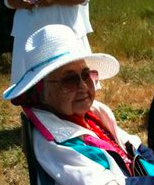
Klallam was a Straits Salishan language of the shores of the Strait of Juan de Fuca, spoken on the northern Olympic Peninsula of Washington and across the water at Beecher Bay on Vancouver Island. It carried a dense vocabulary of the sea and the seasons for a people who lived by salmon, shellfish and the tides.
A century of English-only schooling left fluency to the eldest. From 1992 the linguist Timothy Montler and the educator Jamie Valadez worked with Hazel Sampson and other speakers to build the first Klallam dictionary, published in 2012. Adeline Smith, the next-to-last native speaker, died in 2013; Sampson, fluent into her 103rd year, died on 4 February 2014 — the last person raised in the language. The tribes teach it again, and bilingual street signs went up in Port Angeles in 2016, but no one now speaks it as a mother tongue.
Worth remembering
- Klallam carried a dense maritime and ecological vocabulary for a people who lived by salmon, shellfish and the tides of the Strait of Juan de Fuca.
- Hazel Sampson kept her fluency into her 103rd year and became the anchor of the entire documentation effort — the last voice the Klallam Dictionary was built around, a 9,000-entry volume published by the University of Washington Press in 2012.
Gallery
Sources
- Klallam is a Straits Salishan language of the northern Olympic Peninsula of Washington and Beecher Bay on Vancouver Island; its last first-language speaker, Hazel Sampson, born 1910, died on 4 February 2014. Wikipedia
- From 1992 the linguist Timothy Montler and educator Jamie Valadez worked with Hazel Sampson and other speakers to compile the Klallam Dictionary, published in 2012 — the language's first full dictionary. NPR
- After her death the language has no first-language speakers, though tribal programs continue to teach it and bilingual Klallam–English street signs were installed in Port Angeles in 2016. Wikipedia
- The Klallam Dictionary compiled by Timothy Montler, published in November 2012 by the University of Washington Press, contains over 9,000 entries and was built with elders from all three Klallam tribal councils. University of Washington Press
A graveyard tradition: leave a stone to show you came, and remembered.