A trading monopoly that traded almost nothing but its own soaring shares, until the 1720 South Sea Bubble burst and ruined Britain.
Born
1711 CE
Died
1853 CE
Lived
142 years
Dead for
173 yrs
At its peak
Shares peaked above £1,000 in 1720 (from ~£128)
Cause of death
Overreach
The Obituary
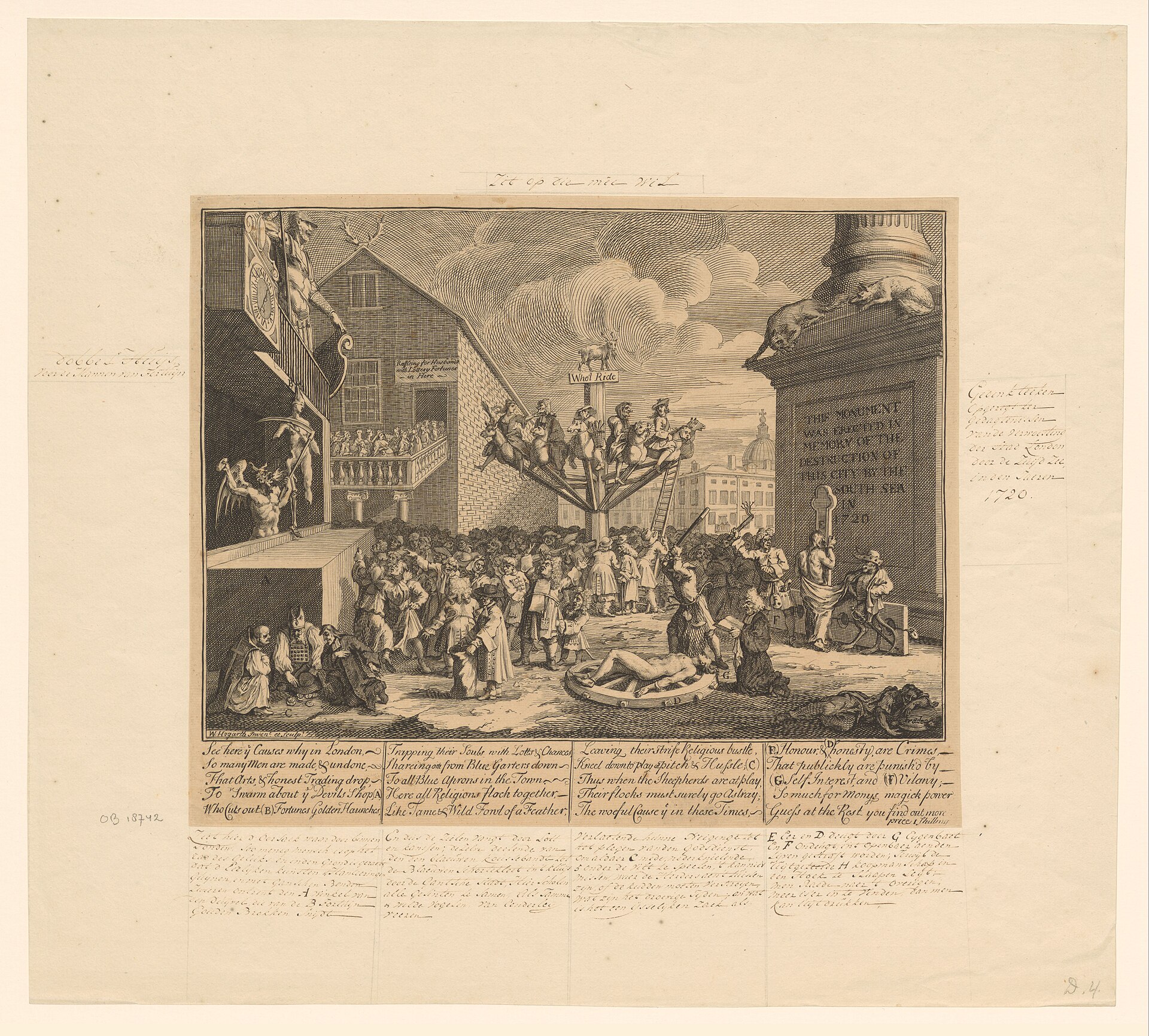
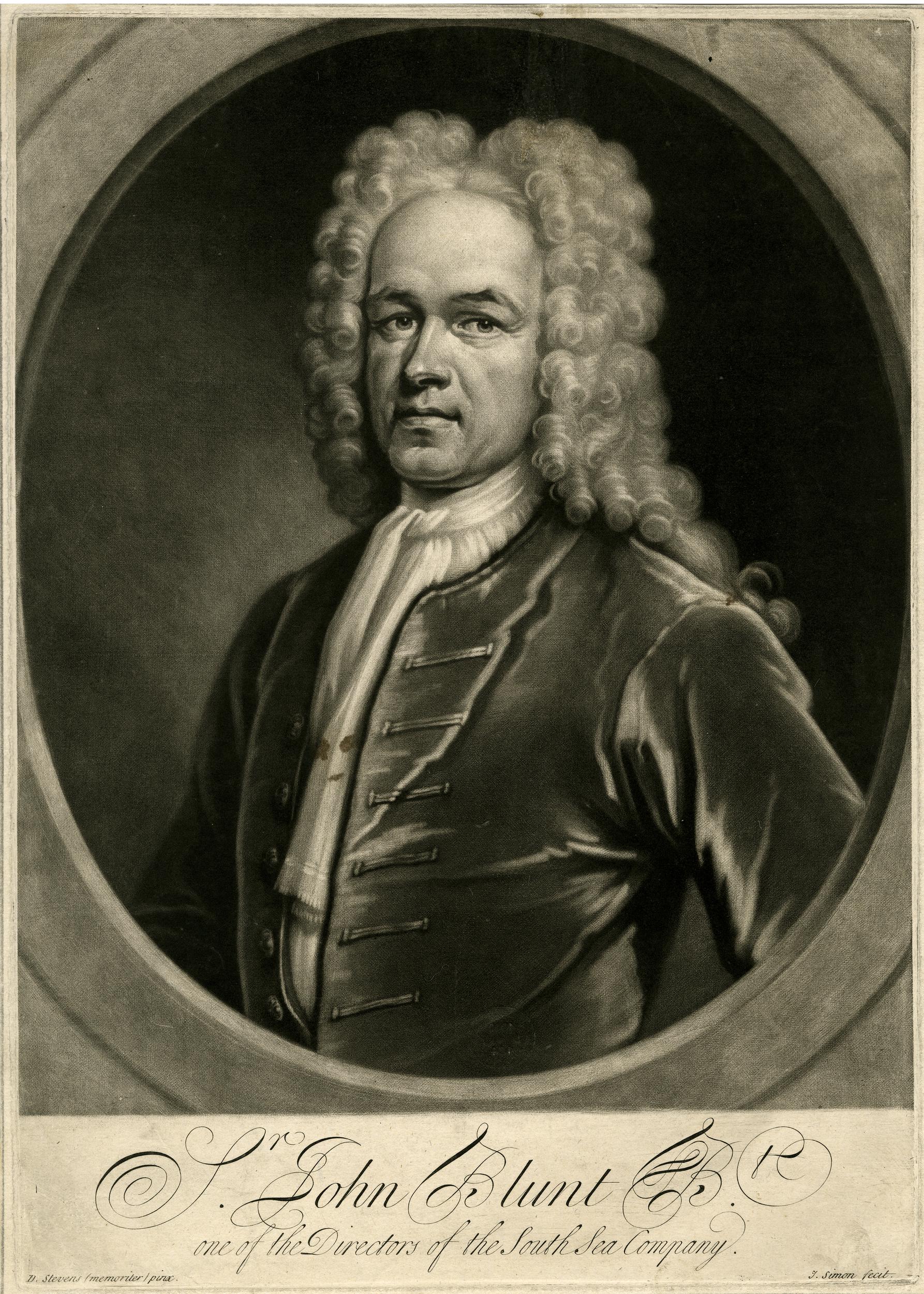
The South Sea Company was chartered in 1711 and granted a monopoly on British trade with Spanish South America, a trade that war and treaty kept tiny. Its chief promoter, John Blunt, steered it instead toward finance. Its true business was financial: assuming portions of the national debt in exchange for shares. In 1720 a frenzy of speculation drove its stock from around £128 to over £1,000 in a few months, drawing in investors across society. The bubble burst that autumn, wiping out fortunes — Isaac Newton among the losers — and triggering a corruption scandal. A husk of the company lingered until Parliament dissolved it in 1853.
Worth remembering
In 1720 its shares rose from about £128 to over £1,000 in months before collapsing, ruining thousands including Isaac Newton.
Its real trade was meagre; the company existed largely to convert and manage British government debt.
Gallery
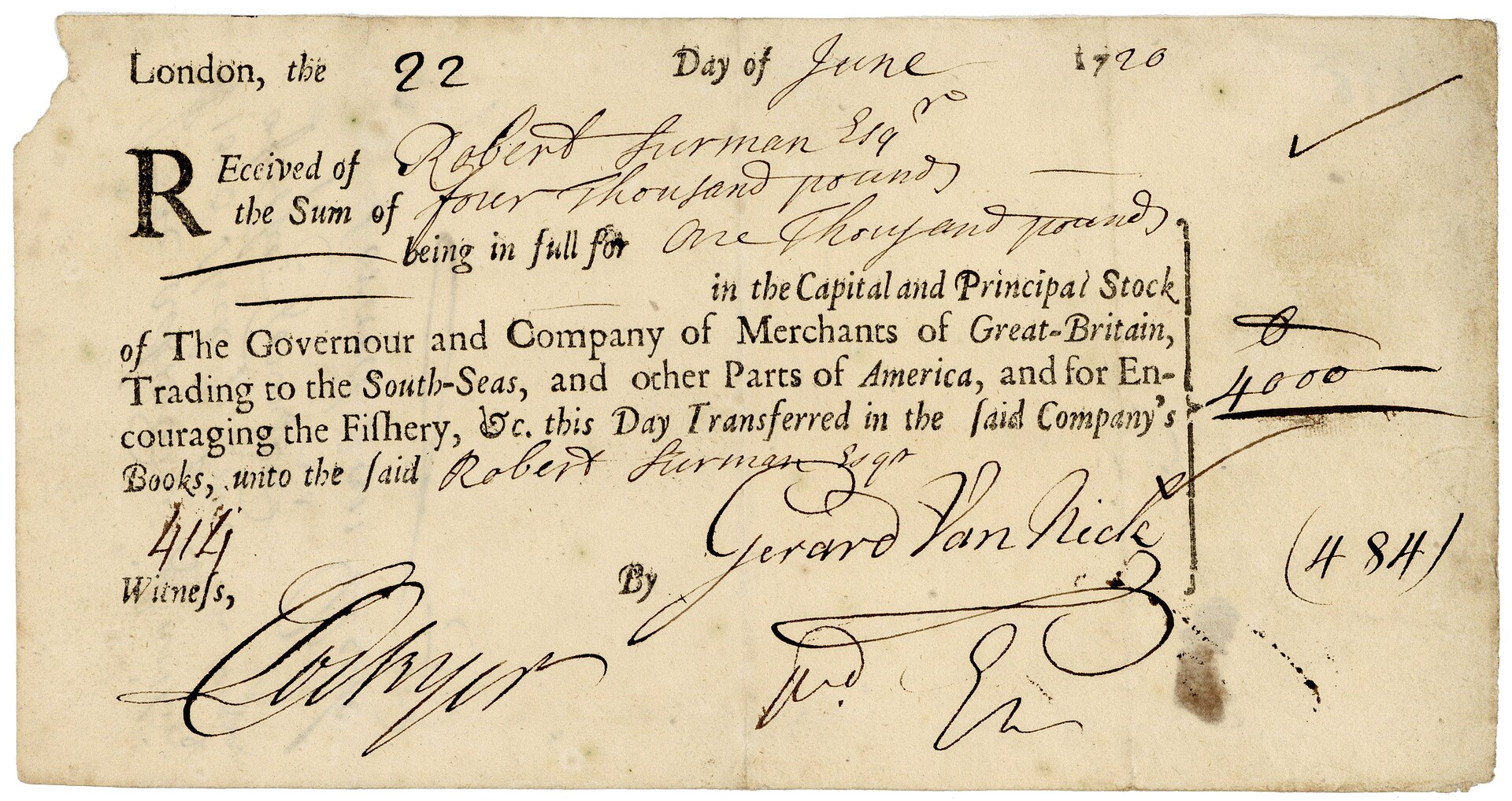
South Sea Company stock certificate issued 22 June 1720 for £1,000 (10 shares at £100 each), purchased at £4,000 during the BubbleCC0Portrait of John Blunt, chief promoter of the South Sea Company, mezzotint engravingPrinted by John Simon after D Stevens · CC BY-SA 4.0
Watch
Reinterpreting the 1720 stock market crashes: South Sea, Mississippi & Windhandel bubbles — Yale University
Sources
The South Sea Company, chartered in 1711, became the centre of a 1720 stock speculation bubble that collapsed and ruined many investors Wikipedia
The 1720 South Sea Bubble's collapse led to the Bubble Act and a parliamentary inquiry into corruption Wikipedia
The South Sea Company, founded in 1711 and granted a monopoly on British trade with Spanish South America, drove a 1720 stock mania — the South Sea Bubble — whose collapse ruined thousands of investors and led to early securities regulation. Encyclopaedia Britannica
A graveyard tradition: leave a stone to show you came, and remembered.
Buried nearby — by shared fate or a neighbouring lifespan.