
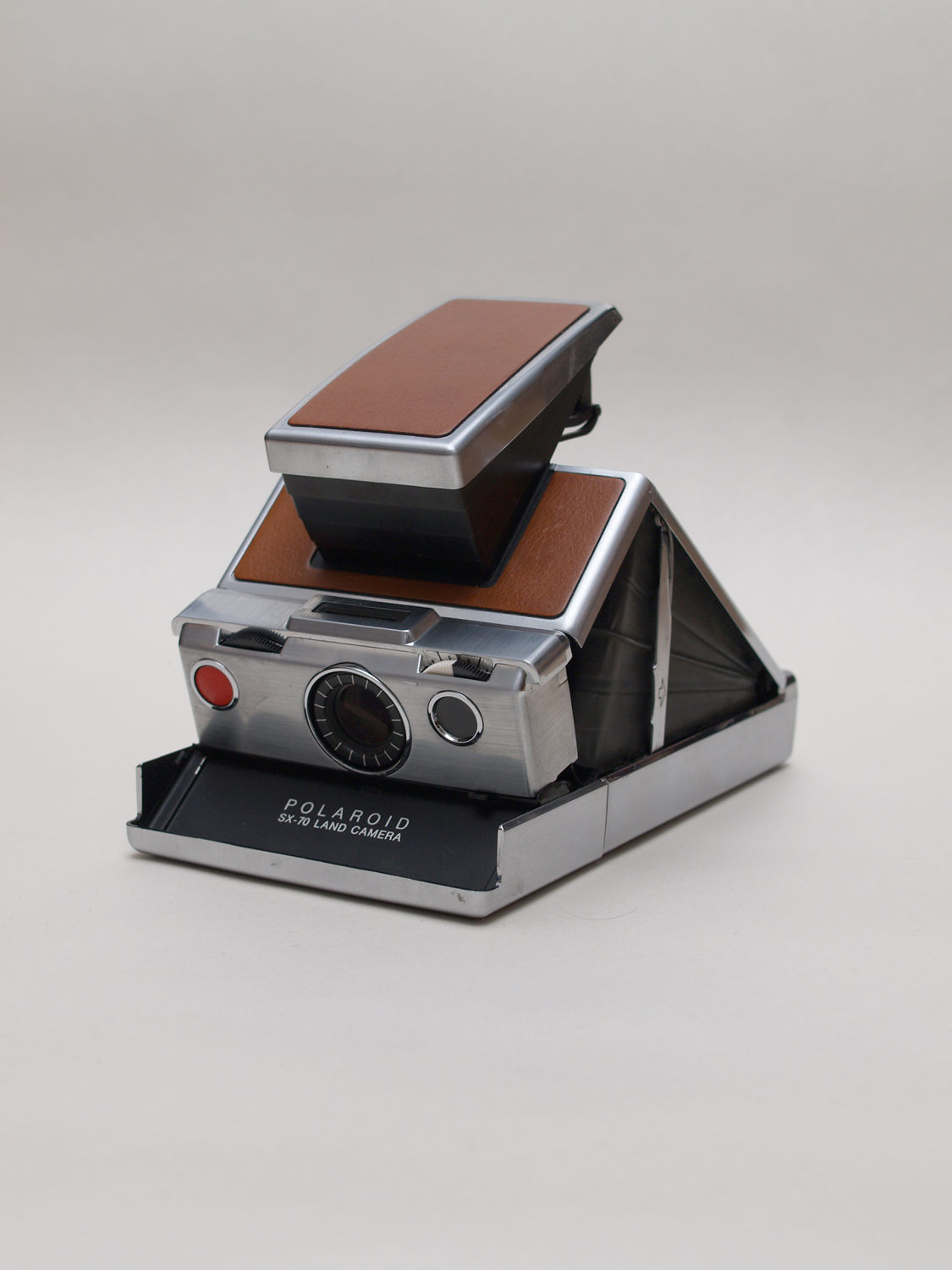
Polaroid was Edwin Land’s invention made into a company, founded as Land-Wheelwright Laboratories in 1932 and incorporated as the Polaroid Corporation in 1937. He demonstrated the first instant camera in 1947 and spent the next four decades extending the lead — colour film in the 1960s, the folding SX-70 in 1972, and a $925 million patent win over Kodak in 1986. At its height it employed 21,000 people and earned around $3 billion a year, all built on the premise that customers would pay a premium to hold a photograph minutes after taking it.
Digital cameras erased that premium. Polaroid saw the threat and was among the first to build digital models, but it would not cannibalise the film business that produced all its margins. Costs stayed high, management hesitated, and as digital cameras became cheap consumer goods in the late 1990s its revenue fell away. It filed Chapter 11 on 11 October 2001, sold its assets within a year, and shrank to an empty shell. The brand survives under later owners, attached to products Land never made.
Worth remembering
- In 1986 Polaroid won a patent-infringement case against Eastman Kodak that ended in a $925 million judgment, one of the largest patent verdicts of its time, and forced Kodak out of the instant-camera market entirely.
- Edwin Land conceived instant photography in 1944 after his three-year-old daughter asked why she could not see a photo straight away; his 1947 demonstration produced a finished print in about 60 seconds.
Gallery

Watch
Sources
- Polaroid was founded as Land-Wheelwright Laboratories in 1932, incorporated as Polaroid in 1937, and reached peak revenue of about $3 billion in 1991, with 21,000 employees at its 1978 height. Encyclopaedia Britannica
- The original Polaroid Corporation filed for Chapter 11 bankruptcy on 11 October 2001; its assets were acquired within a year and the original entity reduced to an administrative shell. Wikipedia
- The bankruptcy is widely attributed to management's failure to anticipate the impact of digital cameras on its film business, despite Polaroid being an early maker of digital cameras itself. Wikipedia
A graveyard tradition: leave a stone to show you came, and remembered.