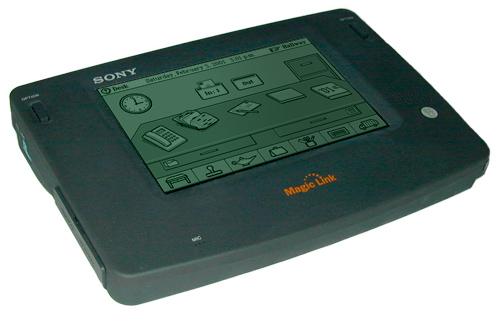
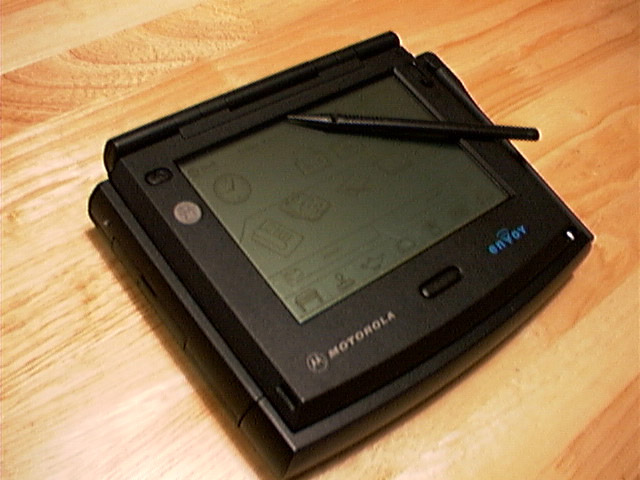
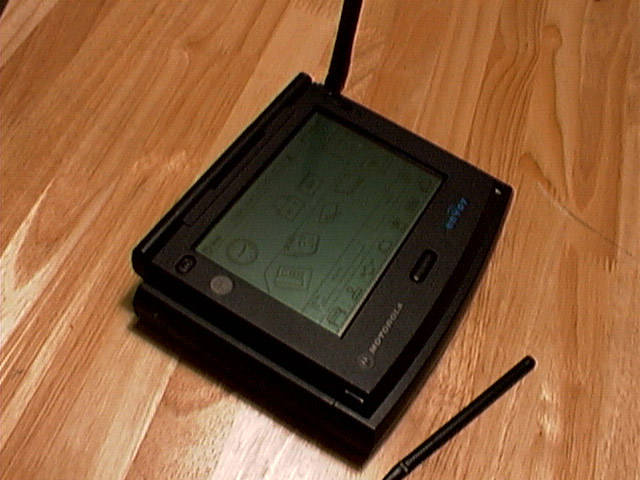
General Magic was spun out of Apple in 1990 by Marc Porat, Andy Hertzfeld and Bill Atkinson to build a handheld communicator that could send messages, reach information services and run software. The concept was right. The company drew investment from Sony, AT&T, Motorola and Philips and raised about $96 million in a 1995 IPO despite having no shipping product. Its Magic Cap system appeared in two 1994 devices, the Sony Magic Link and the Motorola Envoy, which were among the first smartphone-like products ever sold.
They failed on timing and infrastructure. The wireless networks needed to make them useful barely existed in 1994, and AT&T shut down the data network the devices relied on in 1996. The company pivoted to voice-portal software, recovered briefly, then lost that business as broadband internet arrived. General Magic ceased operations on 18 September 2002 and was liquidated in 2004. Its people scattered and went on to build the devices it had imagined a decade too early.
Worth remembering
- General Magic's 1994 Magic Cap devices — the Sony Magic Link and Motorola Envoy — had touchscreens, messaging, apps and network connectivity, a working smartphone concept years before the iPhone.
- Its staff list reads like a roster of the next two decades of tech: Tony Fadell (iPod, iPhone), Andy Rubin (Android), Pierre Omidyar (eBay) and Megan Smith (later US CTO).
Gallery
Watch
Sources
- General Magic was spun off from Apple in 1990; its Magic Cap software appeared in Sony and Motorola PDAs in 1994; it ceased operations on 18 September 2002. Wikipedia
- General Magic attracted investment from major corporations and raised about $96 million in its IPO, with the stock doubling on launch despite no working product. Slidebean
- Alumni Tony Fadell helped create the iPod and iPhone and Andy Rubin founded Android; the original product failed when AT&T discontinued the network it depended on. Axios
A graveyard tradition: leave a stone to show you came, and remembered.