
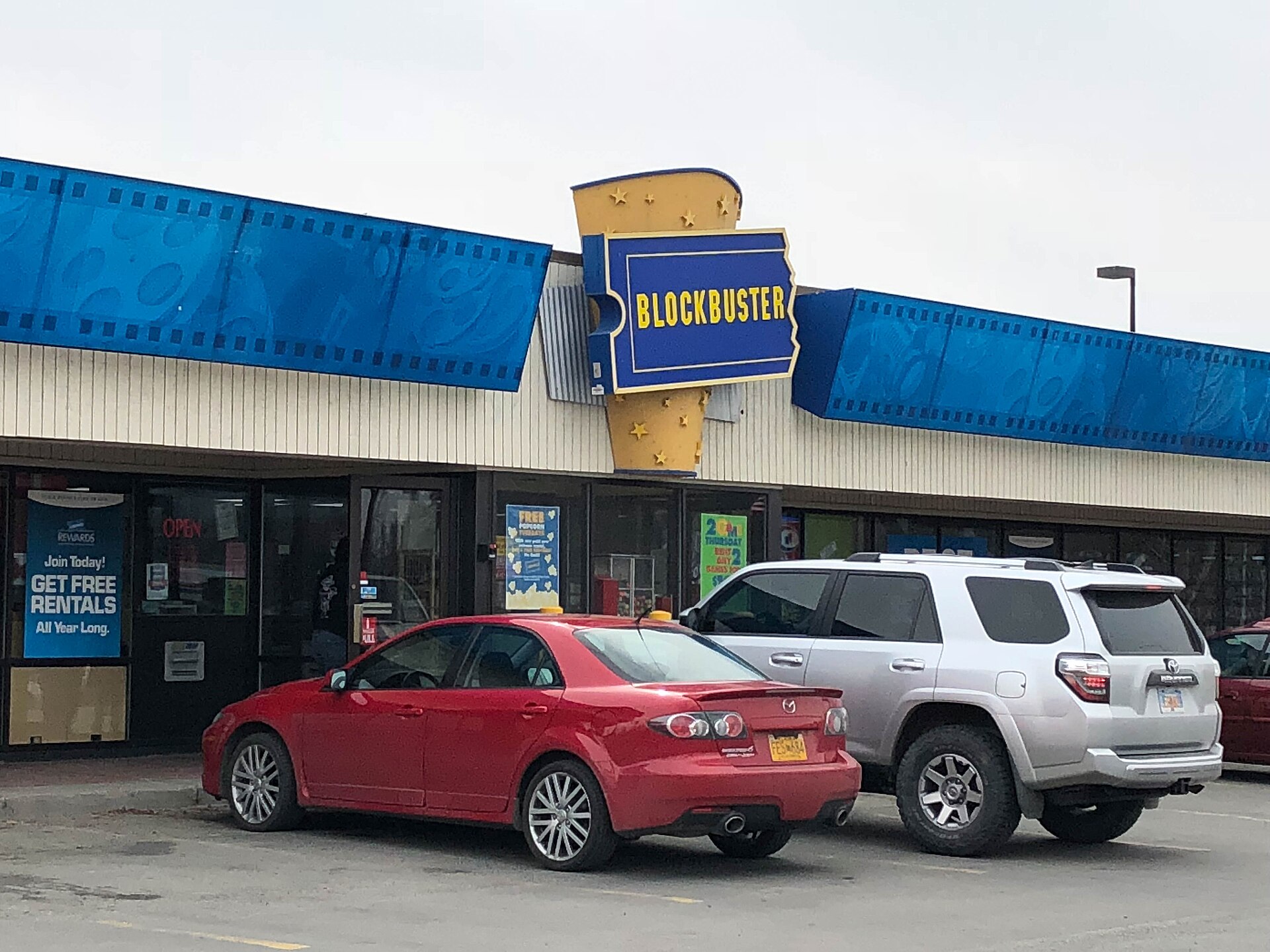
For a generation, Friday night meant Blockbuster: the blue-and-yellow ticket-stub sign, the wall of new releases, the late fees. At its 2004 peak it ran 9,094 stores and employed around 84,300 people across the world.
In 2000 the founders of a tiny mail-order DVD startup flew to Dallas and offered to sell their company to Blockbuster for $50 million. Blockbuster’s leadership reportedly struggled not to laugh. The startup was Netflix. Blockbuster’s own late-fee-driven model was exactly what Netflix was built to kill, and the chain never adapted in time; it filed for Chapter 11 bankruptcy in September 2010. Today a single franchised store survives, in Bend, Oregon — a working tombstone you can still rent a movie from.
Worth remembering
- At its peak it was opening a new store somewhere in the world roughly every 24 hours.
- Late fees were so central to the business that they brought in an estimated $800 million a year — the very thing Netflix was built to abolish.
Gallery
Watch
Sources
- Blockbuster peaked at ~9,000 stores; filed Chapter 11 in 2010; one franchise store remains in Bend, Oregon Wikipedia
- Netflix founders offered to sell to Blockbuster for $50 million in 2000 Wikipedia
- Blockbuster peaked in 2004 with 9,094 stores and around 84,300 employees; after declining a chance to buy Netflix for $50 million in 2000, it filed for Chapter 11 bankruptcy in 2010 and its last company-owned stores closed in 2014. Variety
A graveyard tradition: leave a stone to show you came, and remembered.